
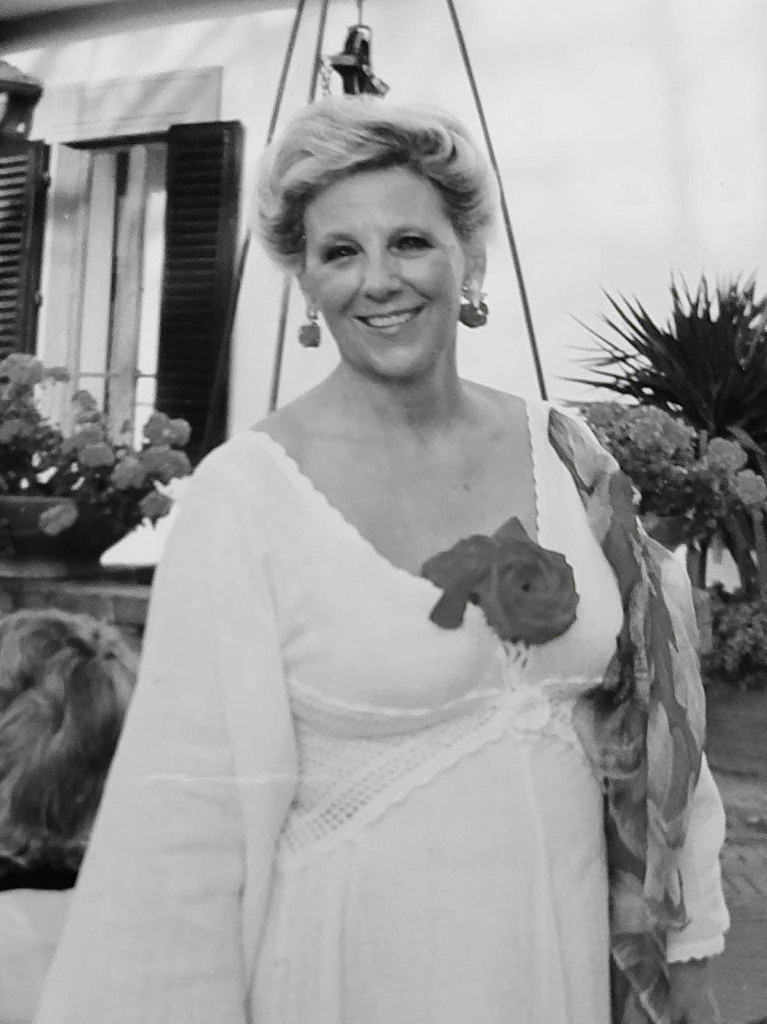
There are gestures we repeat almost automatically, which conceal affections and memories. So it is that every time I pass her window (for it is still her window), I look for Mara’s rose, standing in an antique glass vase. To me, Mara Zecchi was first and foremost a great friend of my family: my father would stop by her shop every day for a chat. But above all she was an example of courtesy and elegance, and of an antiquarian way of thinking that reflected her whole being. And so today, for me as for many who knew her well, there exists her style, and there exists her self: her kindness, her benevolence and the charity which, as we knew, she dispensed so generously.
In telling this I cannot help but recall the last two objects I sold her, not long after my father had died: a pair of seventeenth-century boxwood candlesticks, elegant and turned with small bobbins, which I had bought at a market in the United States. It was an age, I should perhaps not say, when the odd small object could still be carried home in a suitcase, and when I bought them, perhaps in Baltimore, I thought: “these are for Mara.” She bought them, but I have always been left with a suspicion that she did so partly to encourage me, to give me a push. That was her way.
That same generosity was there the last time I saw her, at an exhibition, together with her daughter Lisa. Once again she encouraged me, telling me to press on, that I was good at what I did. She was a woman in an age when there were not so many women in the antiques trade, but like her few female colleagues she distinguished herself by style and energy.
I believe that many of us, of our generation, whenever we see at a fair or in a shop window a certain kind of stand or display, one marked by a particular elegance and a slightly philological reconstruction, paradoxically, of an imagined, better world, will be unable to keep from exclaiming: “This is Mara Zecchi style.”
11 September 2026