
The incorporation of contemporary art into historic, archaeological, scientific, and biographical museums constitutes one of the most significant questions in contemporary museology. Far from being a merely exhibition practice, it concerns the very role of the museum as a site of knowledge production. If the modern museum emerged to preserve, classify, and transmit cultural heritage, its encounter with the contemporary inevitably challenges its interpretative frameworks, opening new possibilities for reading the collections and the contexts in which they are embedded.
The presence of contemporary works within a historic museum does not generate value simply by introducing elements of novelty. Its effectiveness depends instead on its capacity to alter the conditions through which heritage is made legible, bringing to light connections, omissions, discontinuities, and layers of meaning that institutional narratives often present as self-evident. In this sense, the contemporary does not function as an ornament to the past, but as a critical instrument capable of reactivating its interpretative potential.
As Arlette Farge writes in The Allure of the Archives (1989), the past never presents itself as an ordered and fully accessible totality; it emerges through fragments, absences, and traces that continually call for renewed interpretation. From this perspective, the historic museum may likewise be understood not as a repository of definitively established meanings, but as a space traversed by different temporalities, within which the contemporary renders visible once again tensions, omissions, and interpretative possibilities that have remained unresolved.
The most compelling models of recent years demonstrate how this dialogue can assume markedly different forms. A first paradigm is that of the museum as an archive to be interrogated. Programmes such as Ashmolean NOW at the Ashmolean Museum in Oxford have shown how artists can engage with collections not in order to illustrate them, but to make their shadow zones perceptible. The work of Pio Abad, Bettina von Zwehl, and Daphne Wright has transformed the museum into a field of enquiry into material memory, colonial legacies, the vulnerability of objects, and the ways in which history is constructed and passed on.
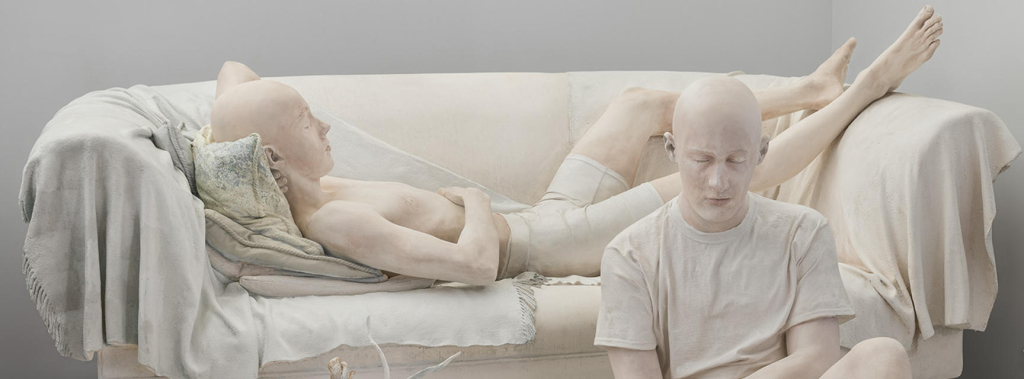
Similar concerns emerge in projects developed in recent years at the British Museum and the Louvre, where contemporary art has been invited to engage with collections that represent not only a sedimentation of knowledge, but also the reflection of specific political, cultural, and imperial histories. At the Louvre, the dialogue between the contemporary and heritage has taken different forms, united by a shared intention: to intervene not in the collection itself, but in the conditions of its perception. Emblematic in this regard is the ceiling painted by Cy Twombly for the Salle des Bronzes in 2010, a permanent intervention that, rather than introducing a spectacular rupture, becomes woven into the museum’s architectural language, transforming the space into a resonant surface between classical memory and contemporary sensibility.
Different, yet equally significant, is Anselm Kiefer’s permanent installation Athanor (2007), created for the north staircase of the Louvre’s Cour Puget, where the themes of ruin and transmutation become a meditation on historical time and the survival of images. More controversial was Jan Fabre’s exhibition L’Ange de la Métamorphose (2008), which provoked extensive debate precisely because it pushed to its limits the tension between contemporary intervention and monumental heritage. Taken together, these examples demonstrate how the Louvre has progressively turned contemporary art into a critical instrument for reactivating its historical legacy without reducing it to a mere backdrop.
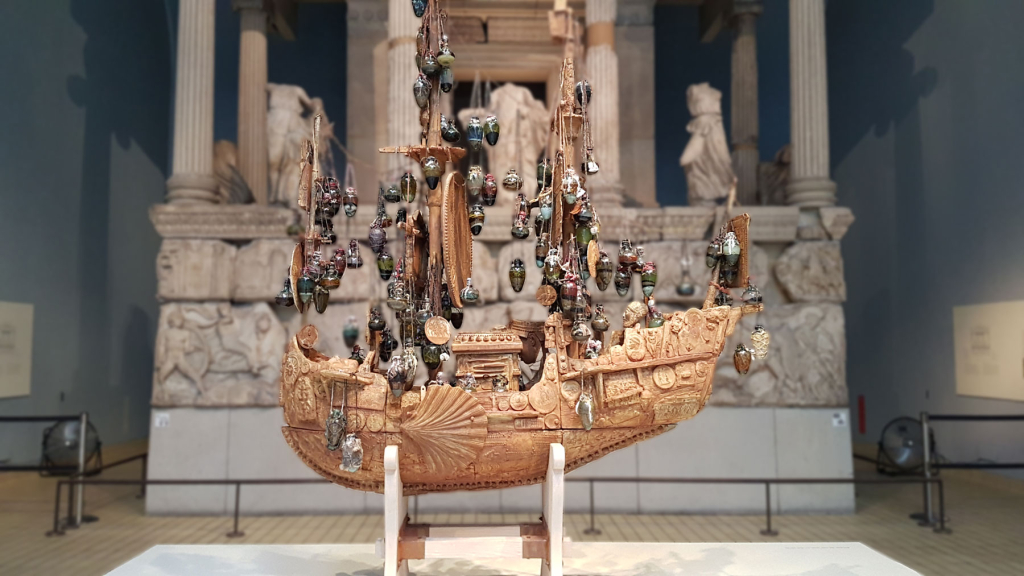
At the British Museum, by contrast, contemporary art has assumed a predominantly critical and self-reflexive function. A paradigmatic example is Grayson Perry’s The Tomb of the Unknown Craftsman (2011), an exhibition constructed through a sustained dialogue between the artist’s works and objects drawn from the museum’s collections. Rather than asserting the autonomy of contemporary art, Perry questioned the very notion of heritage, placing anonymous artefacts, ritual objects, and contemporary works on the same plane. Similarly, Yinka Shonibare’s interventions have helped to make visible the historical and political implications that run through many Western collections, introducing a reflection on the legacies of colonialism, the circulation of objects, and the forms of cultural representation. In this context, the contemporary does not function as an element of aesthetic updating, but as a device capable of challenging the narratives through which the museum constructs its historical authority.
A second model is represented by the museum as a house of memory. In institutions such as the Freud Museum in London or Sir John Soane’s Museum, the dialogue with the contemporary unfolds within spaces where the biographical dimension is inseparable from the heritage dimension. Here, artistic intervention engages not only with the objects on display, but also with the traces of a presence, with forms of cultural survival that continue to inhabit the space.
At Sir John Soane’s Museum, exhibitions such as Retrace Your Steps: Remember Tomorrow (1999–2000), curated by Hans Ulrich Obrist and Cerith Wyn Evans, inaugurated a mode of intervention that uses the house-museum as a device for assembling different historical epochs, inviting artists to engage with the narrative density of Soane’s collections. More recently, projects such as Pablo Bronstein’s A Theatre of Minimum Gesture (2016), Sarah Lucas’s POWER IN WOMAN (2016), and Langlands & Bell’s Degrees of Truth (2020) have demonstrated how the contemporary can activate new readings of historic space without reducing it to mere scenography.
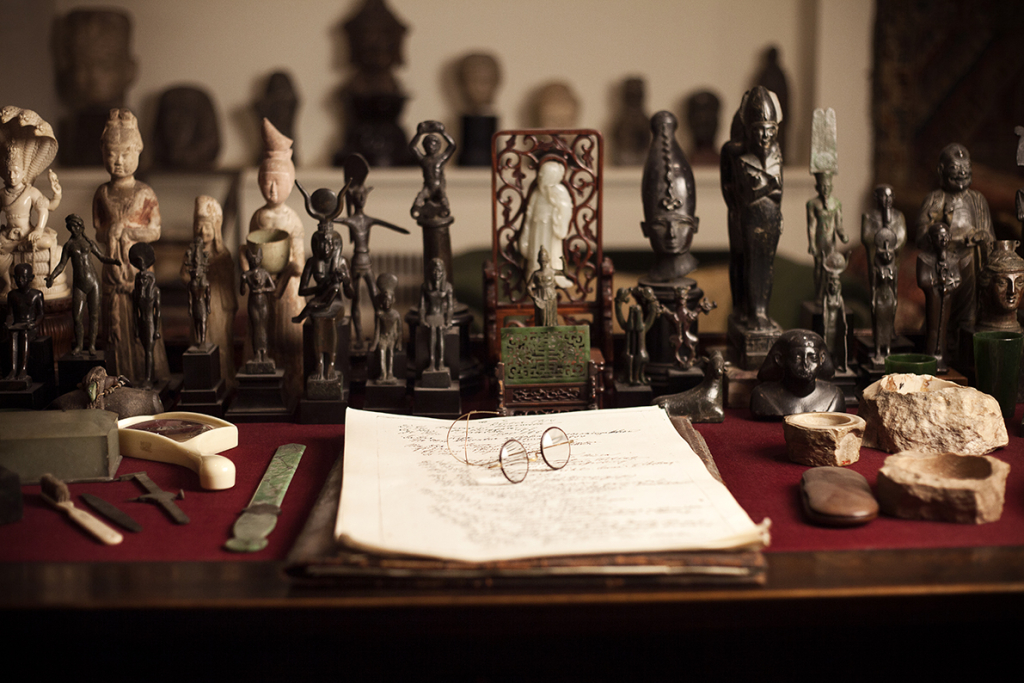
At the Freud Museum, a programme of temporary exhibitions and site-specific commissions has gradually transformed the house at Maresfield Gardens into a laboratory for reflecting on memory, the unconscious, and modes of dwelling. Exhibitions such as Susan Hiller’s The Moving Museum and collective projects including Saying It have treated Freud’s collection and the domestic interiors not as relics to be preserved, but as active materials in an ongoing negotiation between past and present.
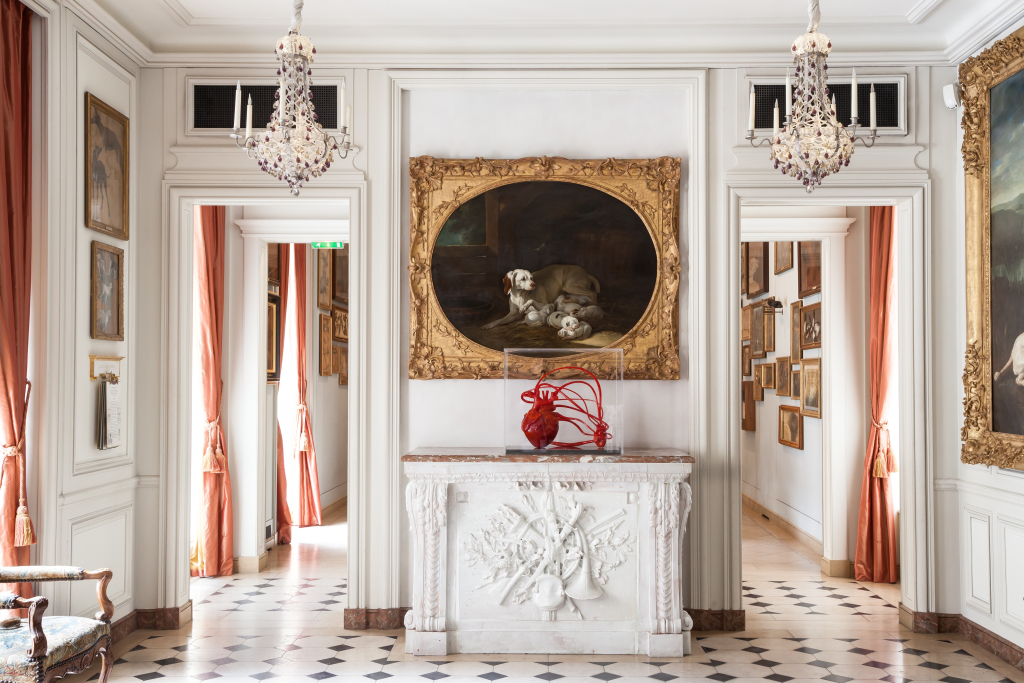
Similarly, the Musée de la Chasse et de la Nature in Paris represents one of the most coherent examples of the integration of historical collections and contemporary inquiry. Here, the dialogue between art, natural history, and material culture does not take the form of occasional interventions; rather, it has become a structural component of the museum’s identity, bringing to light the symbolic complexity of the relationship between human beings, animals, and the environment. Exhibitions such as Mark Dion’s Safaris (2007) and interventions by Sophie Calle have helped to consolidate this approach, treating the collection not as a repertoire of objects to be reinterpreted from the outside, but as a system of narratives through which to explore the relationships between observation, desire, domination, and the representation of living beings.
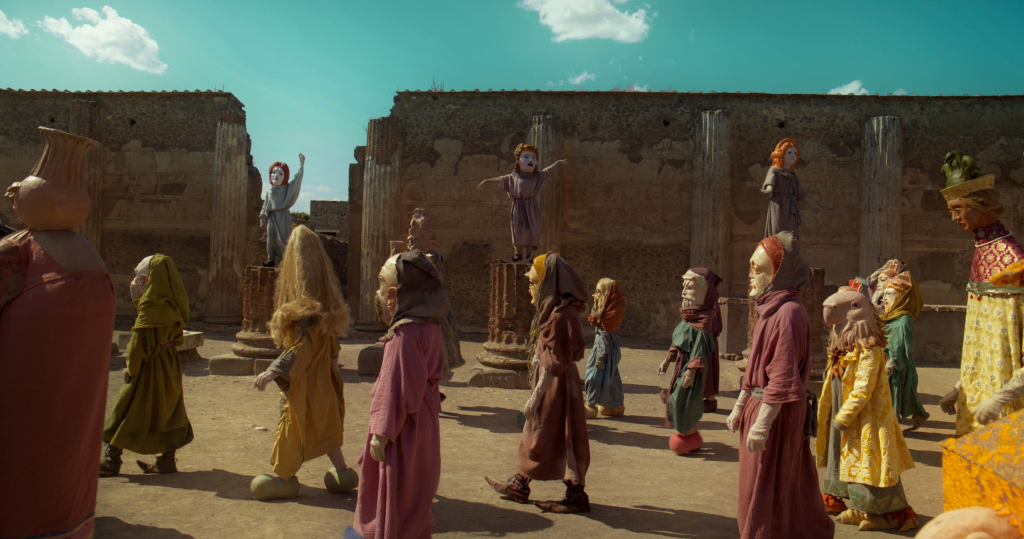
A third paradigm concerns the museum as a stratified temporal structure. In such cases, the contemporary intervenes not so much in relation to the collections themselves as to the coexistence of different regimes of time. This is evident, albeit in different ways, in institutions that work through the coexistence of heterogeneous temporalities, such as Ca’ Pesaro and Pompeii. In the latter case, the programme Pompeii Commitment. Archaeological Matters approaches the archaeological site not as a monumental backdrop, but as a research device, articulating commissions, fellowships, and acquisitions that investigate the relationship between ruin, memory, and contemporary production. The commission entrusted to Wael Shawky for I Am Hymns of the New Temples (2022–2023), for example, approached Pompeii as a narrative structure in which myth, theatre, and history continue to intertwine beyond the rupture caused by the eruption. A different yet complementary perspective was introduced through the Digital Fellowships of Rose Salane and Allison Katz, which shifted attention away from the site’s monumental aspects towards systems of classification, archives, and the circulation of images, demonstrating how archaeology can function not merely as an object of study but as a critical methodology in its own right.
An extreme example is provided by Kolumba in Cologne. Designed by Peter Zumthor on the ruins of the Church of St. Kolumba, the museum represents one of the most radical instances of integration between archaeology, architecture, historical art, and contemporary art. Here, the contemporary is not a temporary guest but an essential component of the museum’s identity. Works from different periods coexist without predetermined chronological hierarchies, in an experience that privileges perception, duration, and attentiveness over the linear progression of history.
Alongside these successful models, however, a number of recurring pitfalls also emerge. The first lies in the reduction of contemporary art to a tool of institutional promotion. When artistic intervention is conceived primarily as a means of increasing a museum’s appeal, the dialogue with heritage tends to be exhausted within the logic of the event. Emblematic in this regard was the debate sparked by Jeff Koons’s exhibition at the Palace of Versailles in 2008, often interpreted as symptomatic of a growing tendency to employ the contemporary as a vehicle of media visibility rather than as an instrument for the critical re-reading of heritage.
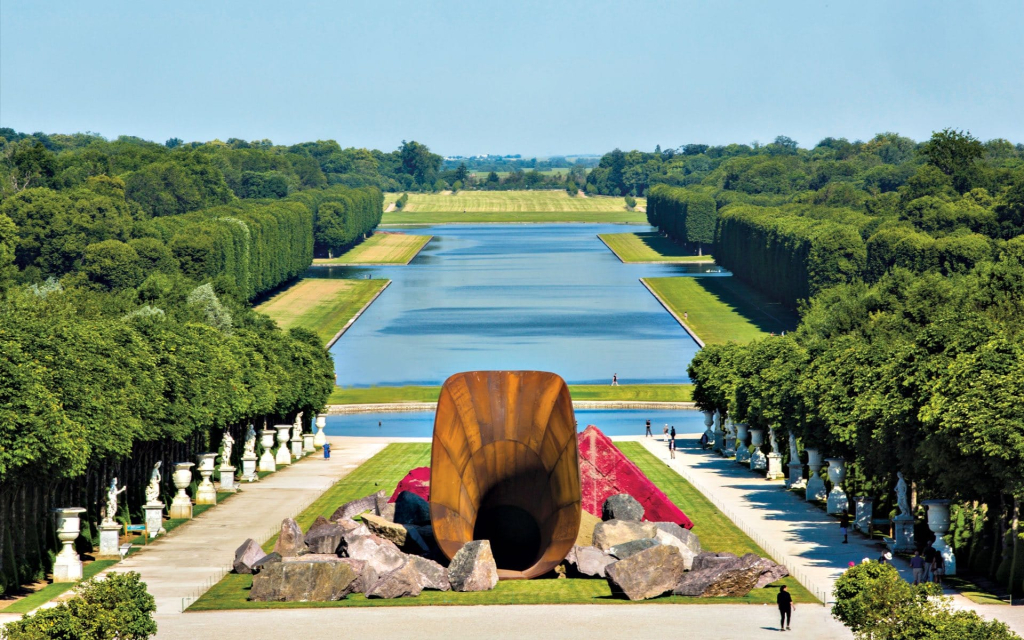
A second issue concerns the spectacularisation of historic space, which is at times transformed into little more than a theatrical backdrop for installations that impose their presence without establishing a genuine relationship with their context. Here again, Versailles provided a significant testing ground: Anish Kapoor’s monumental installations in 2015 fuelled an extensive debate about the risk that the iconic force of an intervention might ultimately overshadow the historical complexity of the site hosting it.
The third, and perhaps the most widespread, problem is the lack of sustained research into collections, archives, and institutional histories. This shortcoming is particularly evident in exhibition projects conceived independently of the museums that eventually host them and subsequently adapted to different contexts without any meaningful engagement with the existing heritage. In such cases, the contemporary tends to maintain a largely indifferent relationship to the site, producing a simple spatial coexistence rather than an interpretative encounter. What ultimately distinguishes the most successful models from the less convincing ones is therefore not the artist’s renown, the scale of the intervention, or the number of visitors attracted, but rather the capacity to generate new forms of knowledge grounded in the historical, material, and symbolic specificities of the host institution.
The most successful examples demonstrate that contemporary art in historic museums achieves its greatest impact when it relinquishes a merely decorative function and assumes a critical responsibility. Its task is not to update the past, nor to render it more accessible through contemporary idioms, but to restore its complexity, making established narratives newly problematic. Drawing on Aleida Assmann’s reflections on cultural memory in Cultural Memory and Western Civilization (2011), heritage can be understood not as what a society merely preserves, but as what it chooses to keep active within its horizon of meaning. From this perspective, the presence of contemporary art in historic museums can be read as a practice of reshaping cultural memory—one capable of transforming the ways in which the past is perceived, transmitted, and debated in the present.
Many of the case studies and critical perspectives presented in this essay derive from the research developed for Nel tempo dell’altro (In the Time of the Other), ( https://atpdiary.com/nel-tempo-dellaltro-ashmolean-museum-oxford/) an editorial project conceived and curated by Rita Selvaggio for ATP Diary, dedicated to exploring the ways in which contemporary art engages with historic and museum heritage.
2 July 2026