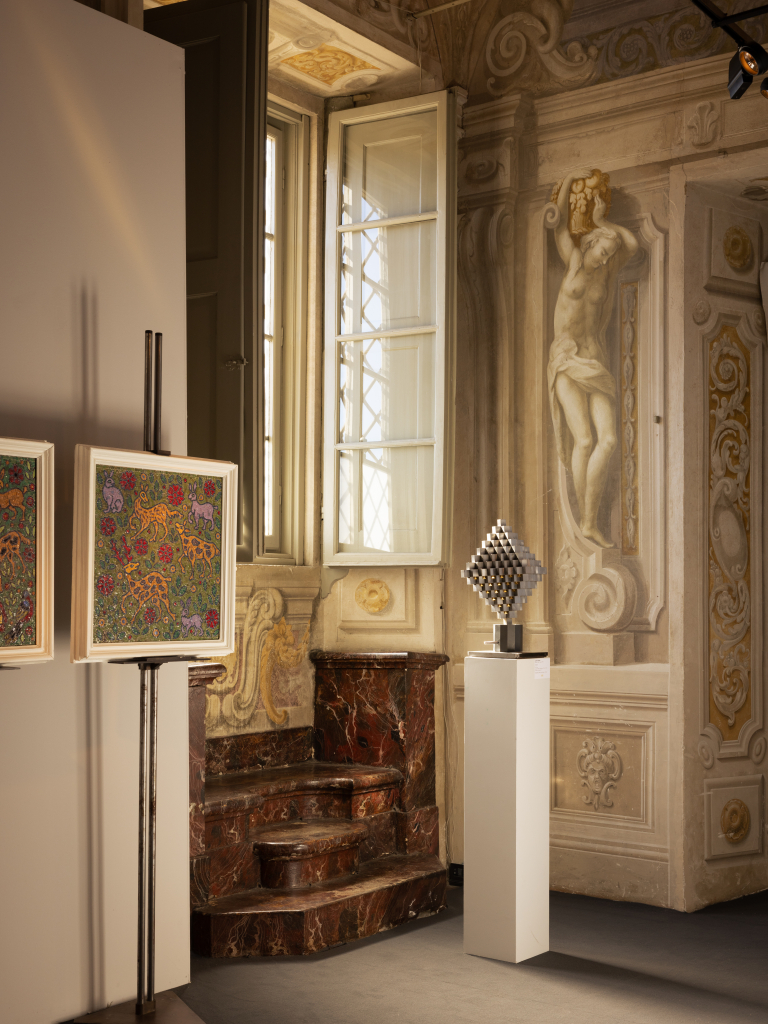
Time passes; life changes. Art endures. And so, too, does the world’s oldest art fair: the Biennale Internazionale dell’Antiquariato di Firenze (BIAF), which, as these words are written, is approaching the close of its 34th edition in remarkably fine form.
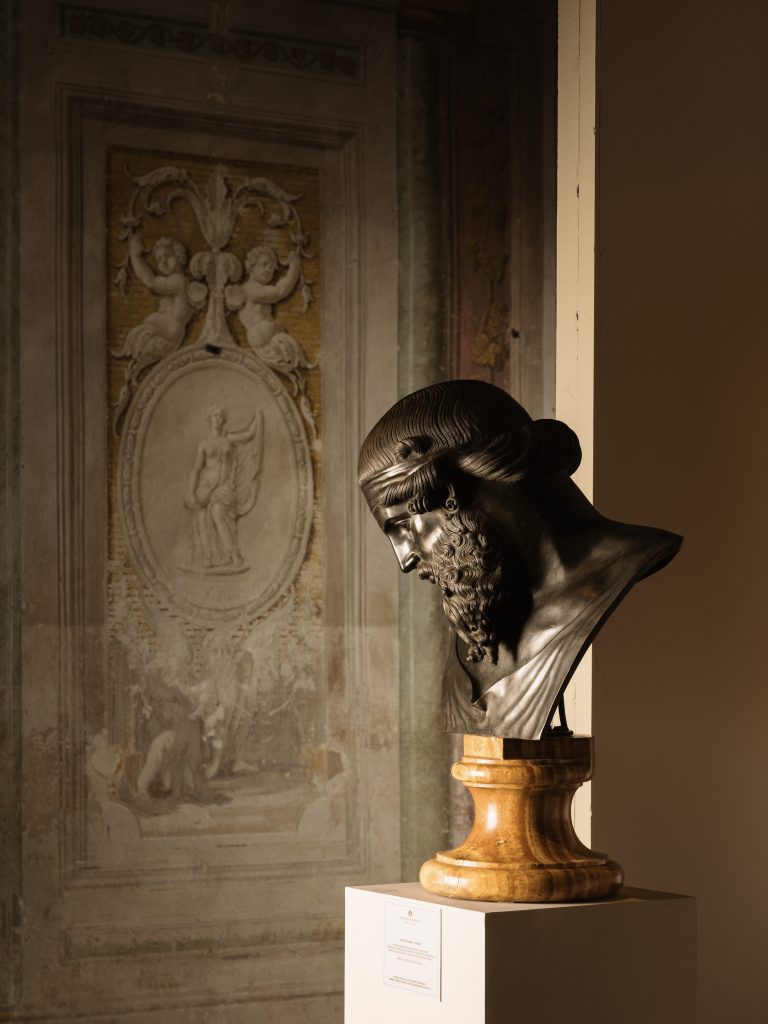
A little more restrained in its presentation, a little brighter and rather easier to navigate, BIAF once again demonstrates its ability to withstand the passage of time – much like the objects that are its very substance. After all, part of what a collector seeks in the works he or she acquires is precisely this capacity to remain unchanged across the centuries: like gold or precious stones, but with the additional distinction of bearing the imprint of one of humanity’s finest qualities – artistic talent.
From cultural anthropology to geography is only a short step, particularly in an age of cultural fluidity and artificial intelligence. This year, the first under the presidency of Bruno Botticelli, it therefore seems especially appropriate to dwell on the adjective ‘international’, which has been part of the fair’s name since 1959. It expresses a cultural necessity before a commercial one: that of projecting Italian art beyond Italy’s borders.
And the world has responded – museums foremost among it. They do not, after all, come to Florence for the flat tax, the food or the luxury shopping on Via de’ Tornabuoni. It is worth considering how and why they come, particularly against a European backdrop marked by an unusually complex convergence of geopolitical tensions, energy challenges and declining competitiveness.
This year the Getty Museum sent Anne-Lise Desmas, senior curator and head of the Department of Sculpture and Decorative Arts at that distinguished American institution, the foremost stronghold of Italian Old Master art in the United States. Anyone wishing to understand fully the role played by the museum on the international stage during the second half of the 20th century would do well to read Burton B. Fredericksen’s The Burdens of Wealth: Paul Getty and his Museum (2015).
Also travelling to Florence from Los Angeles was Sabina Zonno, representing the Huntington. From elsewhere on the West Coast came Furio Rinaldi of the Fine Arts Museums of San Francisco, while from the opposite side of the continent came C.D. Dickerson III, who since last year has headed the National Gallery of Art’s Center for Advanced Study in the Visual Arts and who, together with Andrew Sears and Arturo Galansino, curated Broken at Palazzo Strozzi.
The Cleveland Museum of Art was represented by Alexander Noelle and Cory Korkow, respectively Henry and Anne Ott-Hansen Family Associate Curator of European Paintings and Sculpture, 1500–1800, and Curator of European Paintings and Sculpture, 1500–1800. Then there was Kit Maxwell, Chair and Eloise W. Martin Curator of Applied Arts of Europe at the Art Institute of Chicago.
From the Louvre came Thomas Bohl, curator of 13th-, 14th- and 15th-century Italian paintings, professor at the École du Louvre and director of its general course on the history of Renaissance art. Most notably, Bohl was the curator of the landmark exhibition Cimabue: Aux origines de la peinture italienne, held at the Louvre from 22 January to 12 May 2025.
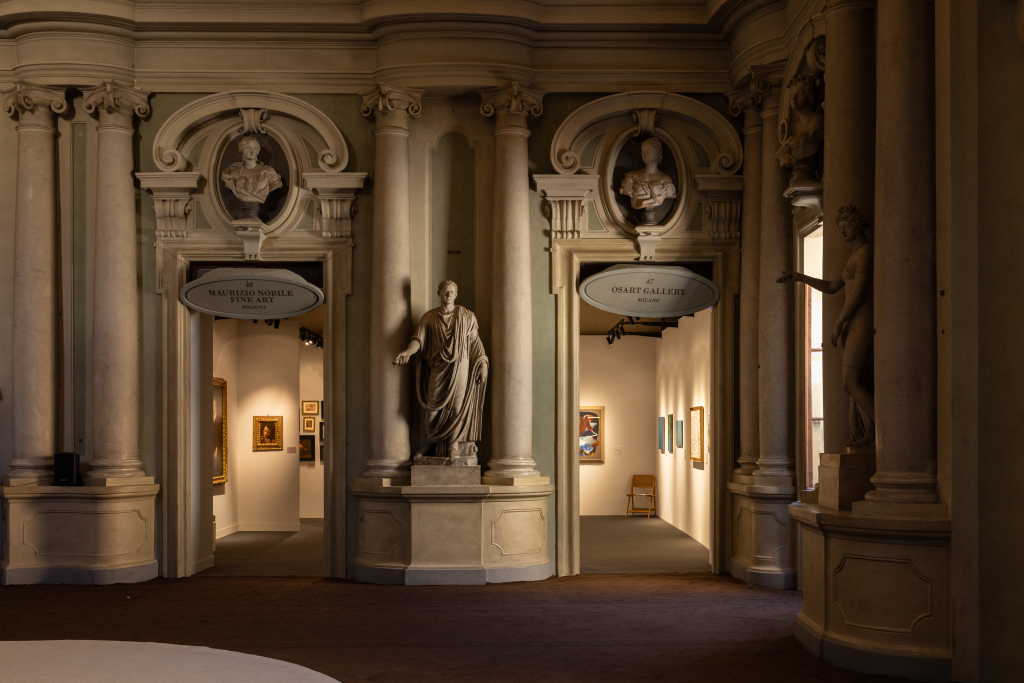
Beyond the museum world, the list of international figures who visited Palazzo Corsini this year included three prominent representatives of TEFAF: Maarten ten Holder, the fair’s managing director; Ugo Pierucci, president of its Board of Trustees; and Manon van der Beuken, director of TEFAF Maastricht.
They were joined by the Belgian dealer Marcel Nies, a leading authority on Asian art and a former non-voting member of TEFAF’s Vetting Committee. Among the other international dealers in Florence were Alexis Kugel; Laura and François De Jonckheere; Marie-Amélie Carlier, heir to Brimo de Laroussilhe, the gallery founded by Nicolas Brimo in 1908; and Andrew Butterfield.
Alongside them came international art advisers including Ulrike Goetz, Alex Kader, Katherine Zock and Isabelle D’Amécourt. Taken together, their presence makes one point particularly clear: when it comes to the international market for historic Italian art, BIAF remains an essential point of reference. It is from here that any serious attempt to develop the fair’s international dimension must begin.
Of the collectors we shall say nothing, in deference to the elegant convention of discretion that still quietly governs this world, even in the age of social media. Two names, however, may be mentioned.
The first is the French interior designer Jacques Garcia, whose Château du Champ de Bataille in Normandy has been conceived as a complete historical and aesthetic ensemble, in which furniture, porcelain, sculpture, textiles, paintings and decorative arts are returned to a coherent architectural setting.
The second is the artist and film-maker Julian Schnabel, to whom BIAF this year awarded the Lorenzo d’Oro for his film devoted to Dante and the Divine Comedy, In the Hand of Dante (2025). For the rest, one need only consult the galleries’ Instagram accounts.
The official figures will be released in a few days, once the doors of Palazzo Corsini have closed and the end credits have begun to roll. Humanists, as everyone knows, have little faith in numbers. They prefer ideas – and the words through which ideas are expressed.
What matters, and what at present is difficult to dispute, is that the leadership of the Biennale Internazionale dell’Antiquariato di Firenze remains secure. The idea behind BIAF remains compelling, sustainable and successful; as does the cultural and economic vision championed by the antiquarian galleries that bring it to life.
Fashions pass. Lives change. Works of art – true works of art – endure.
Galleries at the 34th BIAF
800/900 ARTSTUDIO · AL FINE ART ANTONACCI LAPICCIRELLA · ALESSANDRA DI CASTRO · ALESSANDRO CESATI · ALICE FINE ART · ALTOMANI & SONS · ANTICHITÀ GIGLIO · ATTILIO CECCHETTO ANTIQUARIO · BACARELLI ANTICHITÀ · BOTTEGANTICA · BOTTICELLI ANTICHITÀ · BRUN FINE ART · BUTTERFLY · CALLISTO FINE ARTS · CANTORE GALLERIA ANTIQUARIA · CARLO ORSI · COPETTI ANTIQUARI · CORTONA FINE ART · ED GALLERY · ENRICO FRASCIONE · ENRICO GALLERIE D’ARTE · FLAVIO GIANASSI FG FINE ART · FONDANTICO di Tiziana Sassoli · FRASCIONE GALLERY · GALERIE CANESSO · GALLERIA BERARDI · GALLERIA CARLO VIRGILIO & C. · GALLERIA CONTINUA · GALLERIA D’ARTE FREDIANO FARSETTI · GALLERIA GOMIERO · GALLERIA MARLETTA · GALLERIA POGGIALI · GALLERIA ROBERTO DUCCI · GALLERIA RUSSO · GALLO FINE ART · GALLORI TURCHI ANTICHITÀ · GIACOMETTI OLD MASTER PAINTINGS · GIAN ENZO SPERONE · GIORGIO BARATTI ANTIQUARIO · GIOVANNI ASIOLI MARTINI ANTIQUARIO · GOLDFINCH FINE ARTS · HARTFORD FINE ART – LAMPRONTI GALLERY · IOTTI ANTICHITÀ · LEONE · LONGARI ARTE MILANO · LULLO PAMPOULIDES · MAISON D’ART · MATTEO LAMPERTICO Arte Antica e Moderna · MAURIZIO BRANDI ANTIQUARIO · MAURIZIO NOBILE FINE ART · MEARINI FINE ART · MICHELE GARGIULO “ANTIQUARIO” · MILANI ANTICHITÀ · MIRCO CATTAI FINE ART & ANTIQUE RUGS · ORSINI arte e libri · OSART GALLERY · PAOLO ANTONACCI · PARRONCHI DIPINTI ‘800-‘900 · PENNISI · PIVA & C. · RAFFAELLO PERNICI · RENZO MORONI · REVE ART · ROB SMEETS OLD MASTER PAINTINGS · ROBERTO CAMPOBASSO · ROMANO FINE ART · ROMIGIOLI ANTICHITÀ · SALAMON & C. · SANDRO MORELLI · SANTA TECLA · SCULTURA ITALIANA di Dario Mottola · SOCIETÀ DI BELLE ARTI · TETTAMANTI ANTICHITÀ · TOMASSO Ltd. · TORNABUONI ARTE · VERDINI · VOENA · WALTER PADOVANI
1 October 2026