
Widely used in the corporate world, the Anglicism back office refers to the set of operational, administrative, and support activities that typically take place behind the scenes, without direct contact with the public. Today, the back office has also become something of a trend in the museum sector. Just think of the significance of initiatives such as the opening in 2021 of the Depot Boijmans Van Beuningen in Rotterdam and the upcoming 2025 opening of the V&A East Storehouse in London—cultural institutions that blend the concept of exhibition space with that of archive and storage, guiding visitors into a backstage area usually off-limits to non-professionals. It is a field in which we can claim a pioneering role, as suggested by Andrea Carini, head of the Restoration Laboratory of the Grande Brera.
“In 2001, in order to restore on site the ‘large altarpiece’ by Giovanni Gerolamo Savoldo—one of the most imposing in the world, impossible to move—a room of suitable dimensions was set up directly around it, equipped with a platform and the necessary instruments. Designed by Ettore Sottsass, the structure was transparent and allowed anyone to follow the various phases of restoration treatment up close and ‘live’. Over the course of those two years, public interest grew so much that the decision was made to make the structure permanent, placing it at the center of the exhibition route.”
Conservation activities thus became an integral part of the visitor experience at the Pinacoteca. Over time, the laboratory has been revised, updated, and today carries out intensive research, analysis, and diagnostic work. Carini continues:
“Sharing our work happens through those transparent walls, as well as through updates on our website; inside the museum, images and videos shown on two large monitors provide information on the operations underway; twice a month, moreover, visitors can take part in the meetings we organize to illustrate our activities and answer their questions.”
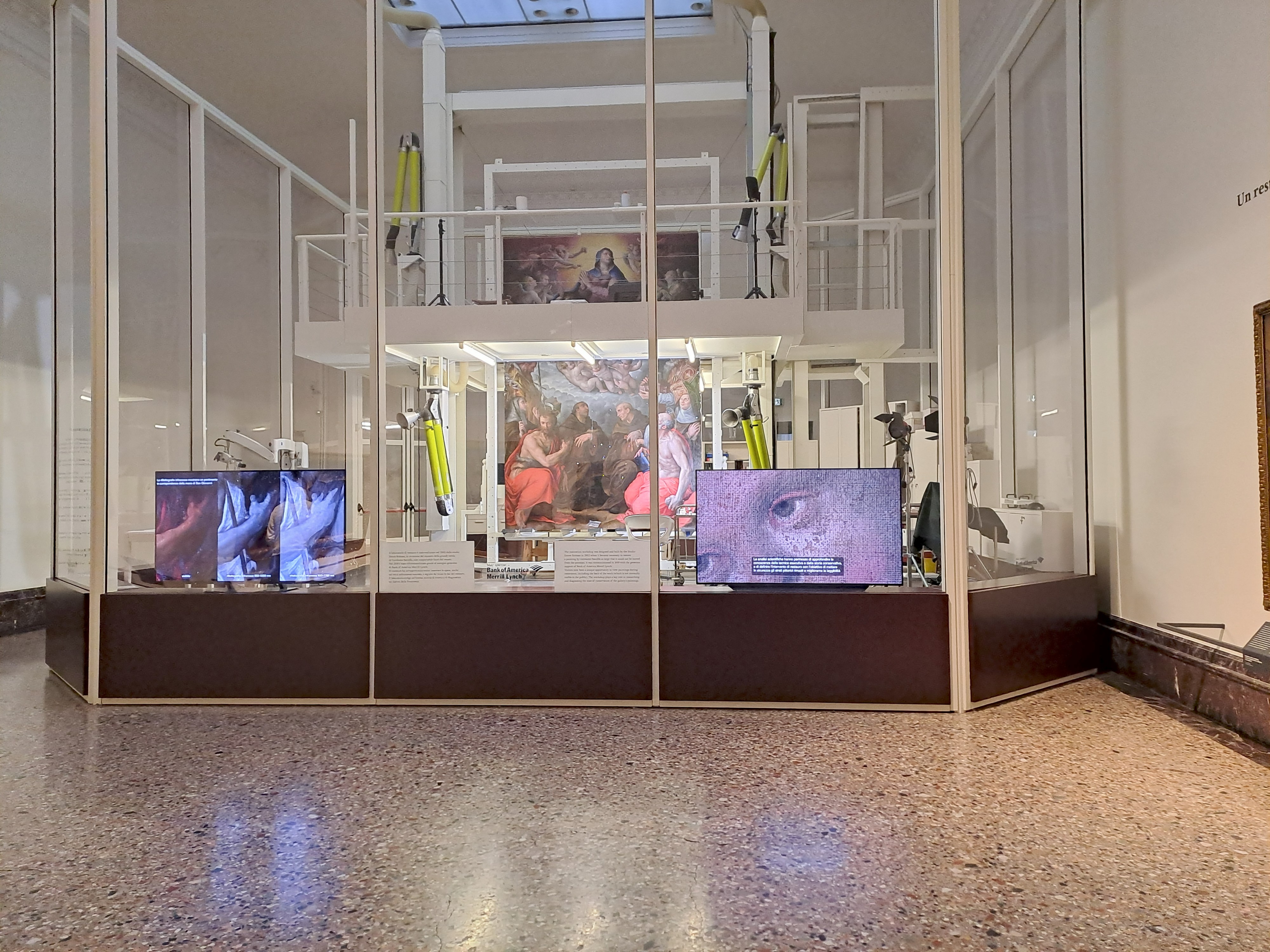
“The Brera laboratory employs five permanent staff members, with additional specialists brought in as needed. Alongside the major restoration projects, we also carry out many small maintenance interventions. It is difficult to describe the full scope of these activities simply by counting the number of operations completed; the restoration of a single small artwork, for instance, may take years—surface area is irrelevant. What matters, instead, is emphasizing that the hands‑on phase is only one part of the process, the final one. Restoration is a collective activity, the result of collaboration among several professional figures: the restorer, the art historian, the scientist. At the moment, for example, we are working on an altarpiece by Rubens with the support of the Venaria Reale in Turin (a world‑class center, together with the Istituto Centrale del Restauro in Rome) and the DiArt laboratory (Diagnostics Applied to Art), which is part of the Department of Physics at the University of Milan.”
Carini evokes Cesare Brandi’s famous definition of restoration as the “methodological moment of recognizing the work of art in its physical consistency and in its dual aesthetic and historical polarity, with a view to its transmission to the future.”
He continues: “Restoration is not a simple technical repair; above all, it is an act of knowledge, a form of study. From this perspective, starting in the 1990s, the contribution of technology has been incredibly important—just think of the role played by radiography and multispectral imaging.”
There is another point to consider, concerning the supposed objectivity of restoration
“Like all cultural interpretations, our work is shaped by the historical moment in which it is carried out. Restoration ‘reads’ the identity of artworks according to the criteria and sensibilities typical of the era in which it takes place. One is reminded of what Federico Zeri used to say about forgers and forgeries: that, in the long run, they are all recognizable because they are unmistakable documents of the dominant taste of the period in which they were produced. The same could be said of restoration, which changes and evolves; and future specialists will date our restorations on the basis of the choices we have made. Consider one of the most important conservation interventions of the last century—the restoration of the Sistine Chapel in the 1980s: a project of enormous significance. But is it still current? We would never approach it in the same way today: methodologies, approaches, and philosophies have all changed.”
A history spanning more than five centuries, with roots in late‑sixteenth‑century Florence and the splendor of the Medici court. Founded in 1588 as a workshop specializing in the creation of artistic objects intended to furnish grand‑ducal residences or to be offered as gifts, the Opificio delle Pietre Dure today has a threefold identity:
“It is a school of advanced training, a museum, but above all a system of laboratories dedicated to restoration. Daily engagement with artworks and their problems is the heart of the Opificio; this is where our commitment to research, training, and public outreach is grounded,” explains superintendent Emanuela Daffra.
This operational dimension must be understood broadly, “a continuous and continually revised experience that embraces different materials, techniques, and areas of expertise. In applying the scientific method—which pushes us never to settle—the dialogue with specialists in chemistry, optics, physics, and other fields of study is fundamental for developing the most appropriate intervention tools. The scanner for multispectral reflectography, for example, was born from this kind of exchange; or consider the non‑invasive techniques which, drawing on methods developed in the medical field, eliminate or greatly reduce the need for sampling.”
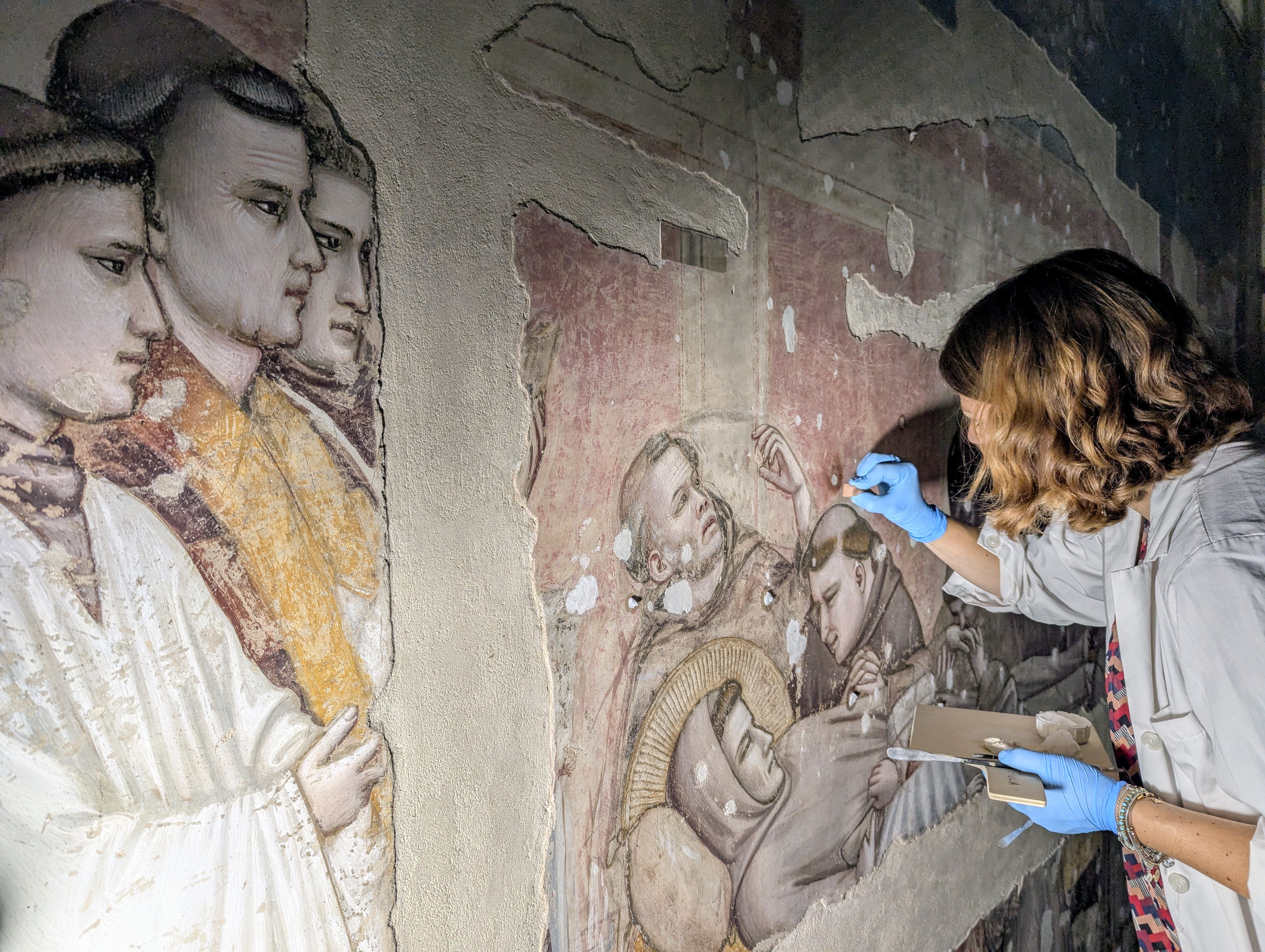
Looking further ahead, the superintendent hints at the use of artificial intelligence:
“Although it represents a very new horizon, it is an issue we have already begun to address, trying as well to imagine truly innovative ways of employing it. The first step—though it may seem obvious—relates to the immediate advantage of AI, which is its ability to process an unimaginable quantity of information. We therefore need to build databases containing everything that can be processed by the algorithm: the results of diagnostic tests, reflectography images…”
Daffra describes “a wonderful line of work, one that mobilizes creativity, requires manual skill, and demands constant updating. Despite many persistent stereotypes, it arouses great curiosity. We notice this all the time; and yet, the attention is still not widespread enough to make it an attractive professional horizon. Let’s say it is not as fertile an employment field as one might imagine, considering the richness of the historical heritage preserved in this country. What is also needed is broader financial support, directed not only toward the most prestigious interventions, which are sustained by a small core of enlightened sponsors.”
For those who continue to nurture the dream of caring for the treasures of the past, the Opificio offers all its theoretical and practical expertise. Its School of Advanced Training and Study (Saf) is a five‑year program, accessed through an international public competition, and awards a diploma equivalent to a master’s degree: “We guarantee an optimal teacher‑student ratio, with five new aspiring restorers admitted each academic year.”
There is also the museum, housed in the historic headquarters at 78 Via degli Alfani: “A small institution, but one of extraordinary refinement, which tells the story of the Opificio’s past as a producer of objects. The museum is not widely known, yet it never fails to captivate—especially when the visit is paired with the experience of the laboratory: discovering how things were made, by hand, in that way, and how they continue to be made today.”
“A winning idea.” This is how Isabella Villafranca Soissons describes the spark that—back in 2003—gave rise to Open Care – Servizi per l’Arte, the first company to offer integrated solutions for the many needs involved in the management, enhancement, and conservation of public and private artistic heritage. A spark born from ice, so to speak, since everything began with the redevelopment project of the historic industrial complex of the Frigoriferi Milanesi—at 10 Via Piranesi, in the eastern part of Milan—now home to an 8,000‑square‑meter climate‑controlled art storage vault that houses and safeguards artworks and precious objects.
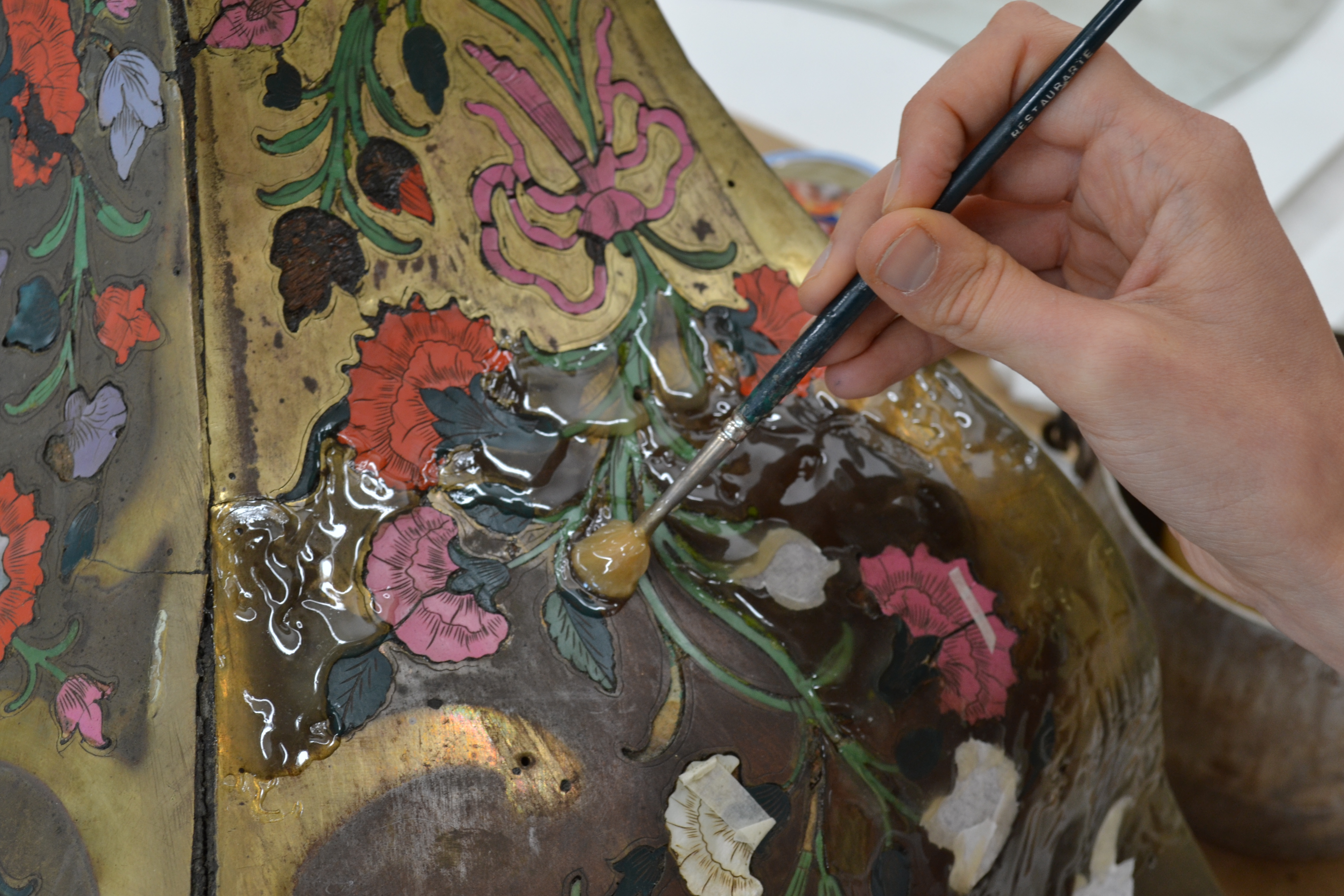
Within the architecture of Open Care’s services, Villafranca Soissons serves as Scientific Director of the Conservation and Restoration Department: “We operate in all areas of restoration defined by the Italian Ministry of Culture. In our three main sectors, in 2025 alone we completed 198 interventions on paintings and contemporary multi‑material works, 58 on carpets, tapestries, and ancient and contemporary textiles, and 22 on furniture and design objects. These are commissions, so each category may include dozens of individual items.”
The department relies on the expertise of eleven in‑house restorers—“though at times we have had as many as twenty”—as well as a network of external collaborators brought in according to operational needs. “We are very well known for everything related to textiles,” Villafranca Soissons notes; among the examples she cites is “a precious tapestry from the Cini Foundation, which we restored to full integrity as part of the 20th edition of Restituzioni, the initiative supported by Intesa Sanpaolo.”
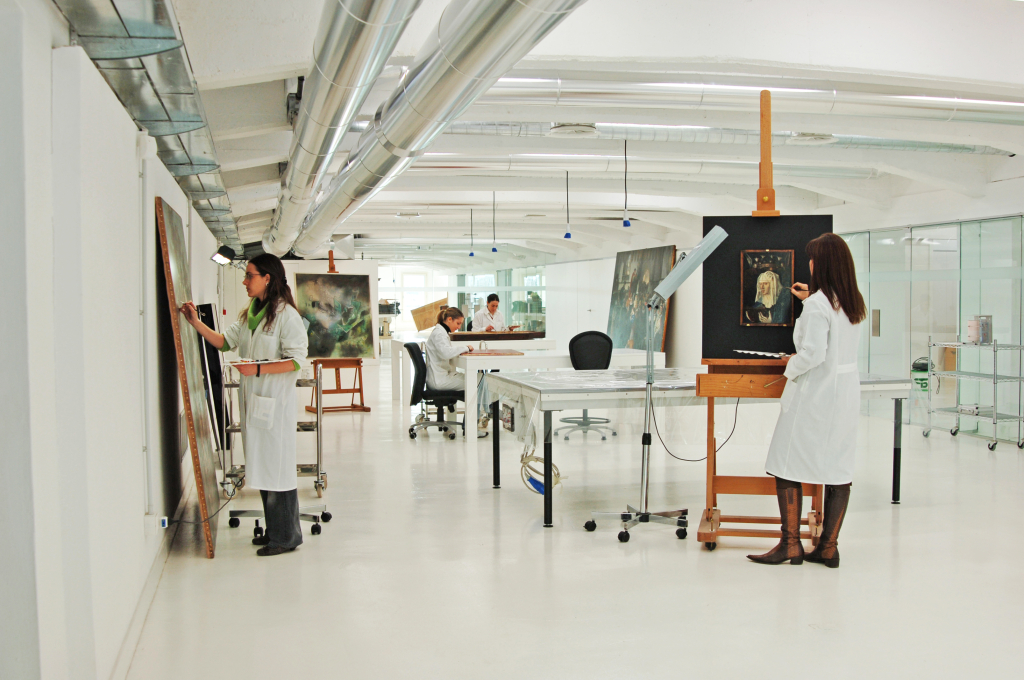
“As for new technologies, investments gained momentum starting in 2003, with particular attention to the diagnostic field. Chemistry refresher courses have sharpened the preparation of our restorers, while in the laboratories traditional solutions have been almost entirely replaced by modern products that use water‑based supports.”
Reflecting on the specificities of the sector—also in comparison with other national contexts—Villafranca Soissons explains:
“For a long time, restoration in Italy rested on its laurels, comforting ourselves with the idea that we were always the best. Today the landscape is more complex. The United States, the Netherlands, and the United Kingdom are major players, with top‑level expertise. Of course, they are extremely specialized, whereas we—drawing on centuries of experience—are always able to restore anything.”
Finally, she turns to the relationship with institutions:
“It is an excellent relationship. Open Care is universally recognized as a high‑profile private entity, called upon to collaborate everywhere. A testament to this is our participation in Padua in the work for the new Museum of Nature and Humankind, the largest university science museum in Europe, created from the merger of the university’s historic collections.”
20 March 2026