
The discovery of a painting always opens new avenues of enquiry, all the more so when the subject is a portrait. The Portrait of Julia Lavarello Anselmo (1907) is a case in point: it reopens the study of fashionable female portraiture and adds to the already substantial oeuvre of Vincenzo Irolli. Credit for the rediscovery belongs to the collector Giorgio Baratti, who, working between Milan and Florence, gathers, safeguards and multiplies beauty and brings it before a wider public. The painting is on view, in collaboration with the Comune di Genova, at the GAM – Galleria d’Arte Moderna in Nervi until 30 November.
Vincenzo Irolli: Life and Art
Vincenzo Irolli was born in Naples in 1860. Having admired the works of Francesco Paolo Michetti and Antonio Mancini at the Esposizione Nazionale in Naples in 1877, he abandoned academic study and enrolled at the Istituto di Belle Arti. Encouraged by Domenico Morelli, a decisive presence in his artistic formation, he exhibited at the Esposizione Promotrice in Naples in 1879 with Felice rimembranza, which won him first prize.
Despite these early honours, Vincenzo Irolli struggled to secure a firm footing within the Italian critical establishment. His principal fortune came instead from his reception in Paris where, between 1910 and 1915, he was regarded as a direct heir to the original nucleus of the Italiens de Paris, sharing the portrait researches pursued by Giovanni Boldini. Whereas in France he enjoyed considerable critical success, in Italy he was often dismissed as a painter merely in the service of the bourgeoisie. This verdict shaped his official reputation, though it did not prevent him from winning great popular acclaim at exhibitions in Genoa, Turin, Milan, Naples and Rome.
Irolli’s painting owes much to the investigations of Morelli, Mancini and, above all, Mariano Fortuny y Marsal, the Spanish artist who passed through Naples in 1874. Expansive atmospheres, intense light and a rich, vibrant impasto define his idiom, which fuses colour and light alike in landscape and in genre portraiture. In the female figure he essayed a range of types: women absorbed in daily occupations (as in La lettura, 1930); the femme fatale (as in Dama sul divano, with its Boldini-esque echoes); and a tribute to the delicacy of women’s work (La venditrice di violette). Irolli chose portraiture as a means of recounting the world around him without exaggeration, allowing the power of colour to emerge as a pure manifestation of light and beauty.
Portraiture at the Turn of the Twentieth Century
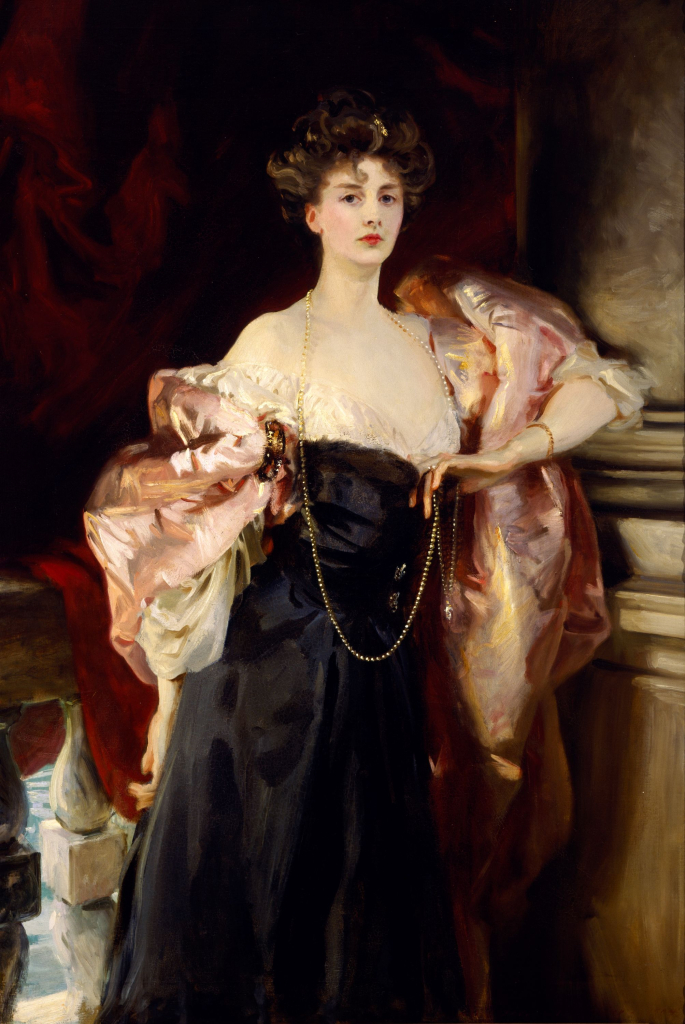
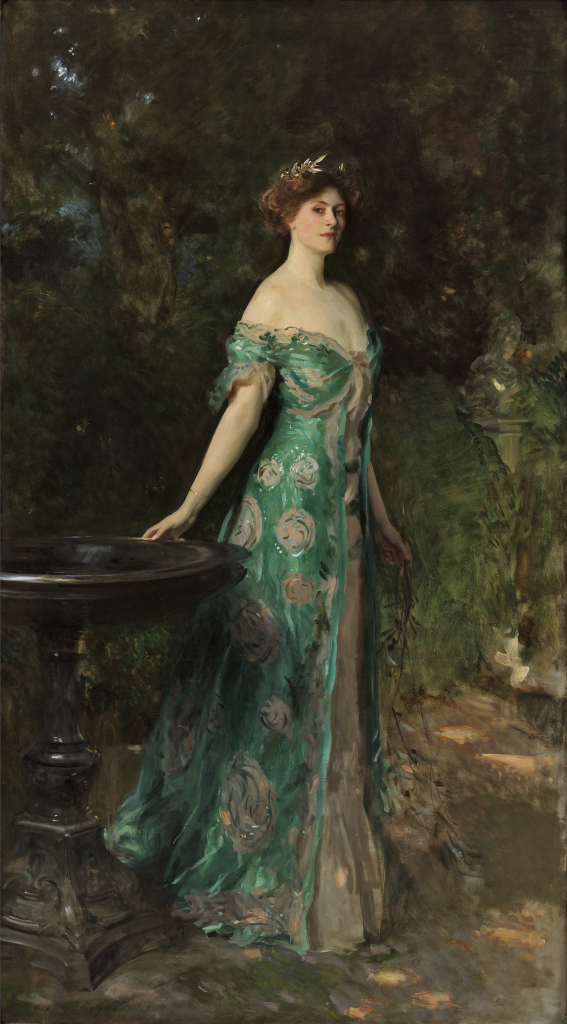
The Portrait of Julia Lavarello Anselmo confirms Irolli’s capacity to absorb the lessons of his masters Morelli and Mancini, who were in turn influenced by two international figures of the first rank: John Singer Sargent and James Abbott McNeill Whistler. Sargent met Mancini in Italy in 1878; Mancini subsequently entered the Englishman’s circle in Rome and made a fruitful journey to England in 1901–02, a period of great importance for his portraiture. Though Mancini generally favoured small formats, in his Portrait of Signora Pantaleoni (1894) he looked directly to the monumentality of Sargent’s Madame X (1884). Whistler, for his part, brought to Italy a colourism comparable to that of Titian and Velázquez, together with an elegance of pose that broke decisively with rigid academicism.
As Manuel Carrera has observed, between 1890 and 1910 portraiture was the genre in Italy most receptive to international stimuli. London became the capital of modern portraiture thanks to the founding, in 1891, of the Society of Portrait Painters, where Boldini and Mancini exhibited with enormous success alongside Sargent and Whistler. While Boldini depicted women of sensual, beguiling beauty, Mancini (and with him Irolli) worked upon the painterly surface and the expressive use of colour to heighten pose, gaze and the effect of surprise.
The genre was further consolidated by the great exhibiting institutions. The first Venice Biennale of 1895 and, in particular, the fifth edition of 1903, with its celebrated ‘Sala del Ritratto Moderno’, established portraiture at the international level. In 1904 the Mostra Internazionale del Ritratto in Rome provided a further occasion for comparison, with works by Boldini, Sargent, Mancini and Noci. Italian portraiture of the early twentieth century thus absorbed European currents while developing along regional lines, in continuous dialogue with foreign masters.
Julia Lavarello Anselmo: Art and Social Standing in the Belle Époque
Set in a dark interior furnished with a potted plant and wallpaper decorated with foliate, Pompeian-style motifs, the portrait presents Julia Lavarello Anselmo in full monumentality: three-quarter-length, hair gathered up, wearing a refined day dress and precious jewels that signal her position as the wife of one of the world’s foremost shipowners.
Her necklace can be identified as an elegant diamond rivière, a form of high jewellery that enjoyed great favour in the late nineteenth and early twentieth centuries. Irolli renders with precision both the play of light and the regular sequence of the stones, offering valuable testimony to how such ornaments were perceived in Belle Époque high society. The economic standing of the Lavarello family, prominent in the transatlantic trade with Argentina, suggests that the gems were genuine, acquired on the international markets of London or Antwerp and then set by historic Genoese goldsmiths such as Chiappe or Gismondi.
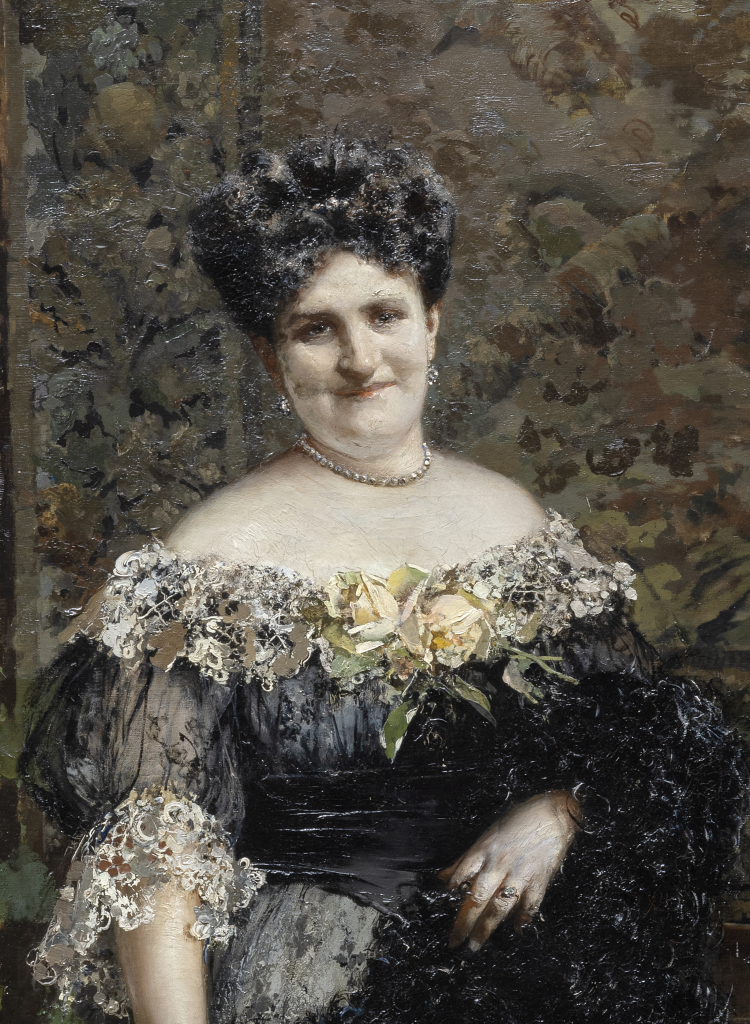
The fashionable character of the picture suggests that the sitters themselves may have proposed the model to Irolli, drawing on their contacts with the South American industrial aristocracy and on international fashion journals. The work answers perfectly to the functions of bourgeois patronage in this period: to celebrate the family through the woman, to consolidate social standing and to display wealth. For Irolli, it represented an important opportunity to engage with a cultivated genre and to pay homage to the great models of past and present, from Morelli and Tallone to Klimt, Boldini and Sargent.
Finally, the painting enters into direct dialogue with the works held at the Galleria d’Arte Moderna in Genoa Nervi and with the Frugone collections at Villa Grimaldi Fassio, which include sculptures and paintings by Monteverde, Tallone, Nomellini, von Lenbach and Boldini. Analysis of this rediscovered work throws light on the historic role of the sea as a privileged channel, not only for commerce and migration but also for the circulation of works of art and of international pictorial languages. Following in the footsteps of Boldini and Sargent, Julia Lavarello Anselmo thus returns home to converse directly with her city.
*The portrait is the subject of research by Gianluca Carchia in Argentina Genova andata/ritorno. L’inedito Ritratto di Julia Lavarello Anselmo di Vincenzo Irolli, edited by Gianluca Carchia, Martina Leone and Fabio Obertelli (Sagep Editori, 2026), pp. 16–29.
24 September 2026

