
A continuing tension between roots and new perspectives: on one side, the figure of the founder and the enduring relevance of his method; on the other, the challenges of modernity, at a time when change is accelerating at a pace without precedent in the years when the culture of conservation first took shape. The recently published volume Cesare Brandi e le frontiere del restauro (Cesare Brandi and the Frontiers of Restoration) brings together the proceedings of a conference organized by the Istituto Centrale per il Restauro (ICR). Its title points towards two horizons. These frontiers are geographical, involving encounters with other approaches and cultural contexts, but also disciplinary, reflecting the many professions now engaged, in different capacities, in restoration and heritage protection. It is a field that is expanding as technology advances, sustainability becomes an urgent necessity, and our very perception of heritage changes.
For the ICR, established in 1939 through a project conceived by Brandi and Giulio Carlo Argan to place conservation on a scientific footing and develop shared criteria for treatment, the challenge is to embrace these changes while keeping its founding purpose true to its identity. Federica Giacomini, director of the Institute’s School of Advanced Training, coordinator of its laboratories, and lead for restoration, emphasizes this point: “The ‘new frontiers’ explored by the conference and its proceedings represent a broadening of perspectives, as has happened in many other areas of human activity. Our profession, however, remains grounded in craftsmanship and in manual, applied, and practical skills that are still fundamental. Restoration remains deeply rooted in a historical and critical approach. The choices we make are never self-evident, nor are they predetermined by the findings of the exact sciences or by the material alone. They always emerge from a balancing of considerations and an analytical assessment, case by case, bringing together evidence, interpretation, and responsibility towards the work. In this sense, restoration remains connected to its humanistic origins, following the Italian tradition and the approach formulated by Brandi eighty years ago.”
It is on this foundation that new technologies and the challenges of the present build: “New techniques allow us to examine the physical nature of a work and analyze its constituent elements in extraordinary detail, even reconstructing the artist’s creative process. Today we can investigate historical, original materials in depth, using techniques that are increasingly revealing while remaining respectful of the object under examination. Across all the fields in which we operate, given the wide variety of works entrusted to the Institute, we incorporate recent technologies, including artificial intelligence, and produce three-dimensional models.”
The ICR has twelve restoration laboratories, treating paintings, sculpture, stone, textiles, organic archaeological finds, mosaics, metals, paper, ceramics, and contemporary art. This diversity of materials gives daily substance to the interdisciplinary approach at the heart of debate within the profession: “We employ around forty-five restorers, supported by specialists in chemistry, biology, and physics. We cannot bring all the expertise we need together in-house, so we have numerous agreements and collaborations with research bodies such as CNR and ENEA, universities, and university research centers.”
Then there is training, which Giacomini also discusses through her own experience: “The role of the restorer has changed considerably. When I trained, restoration was not yet a recognized profession, and there was no clearly defined educational route like the one we have today. People often learned in a workshop, within a rather loosely structured framework. Today entry is through a five-year, single-cycle master’s degree, leading to a regulated professional qualification. To work on protected cultural property, restorers must meet the prescribed requirements and be listed on the Ministry’s register. Training and research are intertwined: each stimulates and supports the other. Alongside their theoretical studies, our students work on objects and on restoration sites from the outset. This requires close contact between teachers and students. Regulations stipulate one teacher for every five students in laboratory activities, so our intake remains small. We generally offer twenty to twenty-five places a year. I joined the ICR as a student in 1990: at the time, almost a thousand people competed for fifteen places. Today there are many more courses, including at universities and academies, yet overall interest seems to me to have declined.”
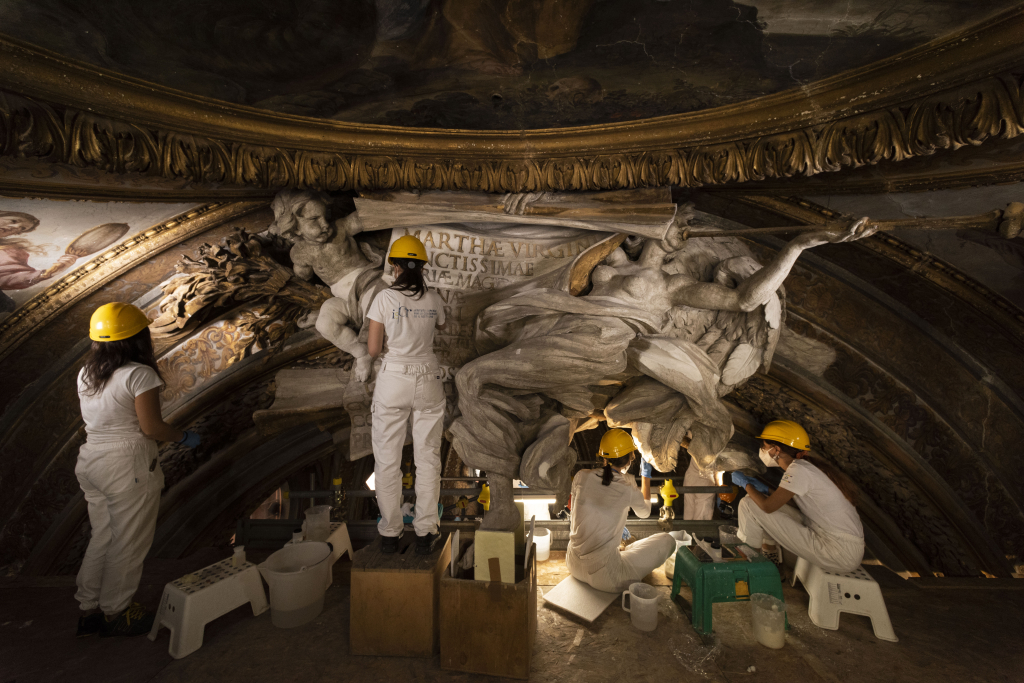
It is a fascinating profession, demanding passion and commitment, but one that remains little understood, with its opportunities for professional growth and achievement still insufficiently recognized: “Many young people tell us they discovered almost by chance that this profession existed… Let’s say it is not among the first options that come to mind after secondary school. We need to make the profession better known and move beyond the stereotypical image of someone working only on scaffolding with a small brush or a trowel. Our graduates can work in preventive conservation, research, consultancy, art handling, the design of supports and safe conditions for works being transported and exhibited, technology, interactions with the environment, and much more.”
These skills and professional profiles are in considerable demand: “Graduates often find employment before completing their studies, and there are opportunities abroad as well. Demand for expertise remains high, yet I am witnessing what I would call a ‘decline in vocations’. Perhaps the work is seen as poorly paid; perhaps it also reflects the wider crisis affecting occupations with a strong manual and craft component.” One thing is certain: restoration is a profession that, we might say, knows no borders, as demonstrated by the ICR’s many commitments abroad and the productive relationships it has established internationally:
“In recent years we have received more requests from countries that do not yet have a firmly established culture of restoration or a structured heritage protection system. We have training partnerships with Maghreb countries, including Morocco, Algeria, Tunisia, and Libya, also reflecting the commitment to cooperation with the Mediterranean and North Africa supported by the Ministry and the Government. We also maintain relationships with Armenia, China, India, and South Korea through specific projects, exchanges, and training activities. And that is without counting our collaborations and contacts elsewhere in Europe… Italian restoration is regarded everywhere as a field of excellence.”
An impressive volume of work, then. “We are a small institution in relation to the amount we do,” Giacomini acknowledges in closing. “The school, the laboratories, restoration sites, research, and partnerships require a great deal of energy. The Ministry’s resources are limited, and staff work with great dedication, often beyond their scheduled hours. There is a strong attachment to the ICR, partly because many of its restorers trained here. It is work undertaken out of passion and the conviction that protecting heritage is a collective responsibility.”
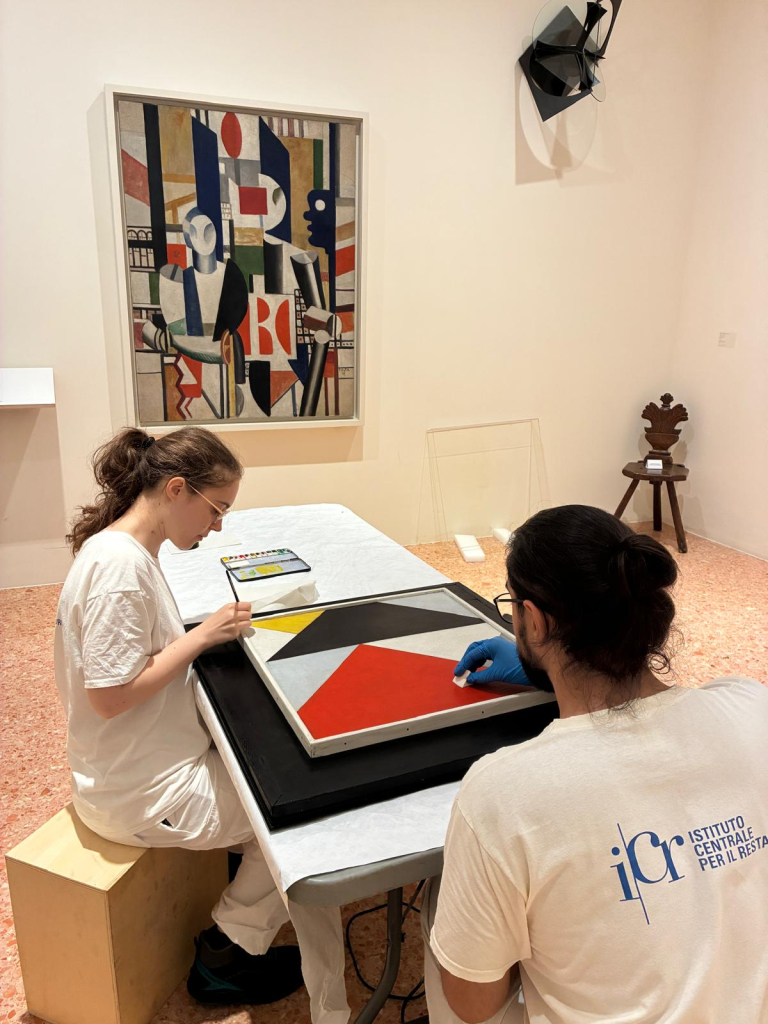
The metaphor Salvatore Amura often uses, he tells us, is that of the toolbox: the set of instruments needed to carry out a task, which technological development has made considerably more extensive and effective in recent years. Amura is CEO of Valore Italia, a research and advanced training center dedicated to the restoration, conservation, and enhancement of cultural and artistic heritage. At its heart is the Scuola di Restauro di Botticino, founded in 1974.
In Milan, the school operates across two locations. Its main premises are within MIND–Milano Innovation District, the district dedicated to science, knowledge, and innovation on the former Expo 2015 site; its laboratories are at 54 Via Cosenz, in the Bovisa neighborhood. This 1,000-square-meter space places students within a distinguished setting: the Bovisa Design District, a dynamic environment shaped by the presence of the Politecnico di Milano and its Department of Design, alongside PoliHub, the university’s startup incubator. The school’s geography itself offers a telling indication of the direction it has chosen: “Our idea is that of a school-laboratory, working in the field on restoration projects that can be very demanding, immediately putting our students and the skills acquired in the classroom to the test,” Amura explains.
The wide range of public and private bodies, museums, cultural institutions, and archaeological sites with which the school collaborates is integral to its teaching. This direct approach has enabled students to take part in actual restoration commissions and projects, working with their teachers on the recovery of more than 1,100 movable objects from Italian and international collections, and around forty buildings and other immovable heritage assets.
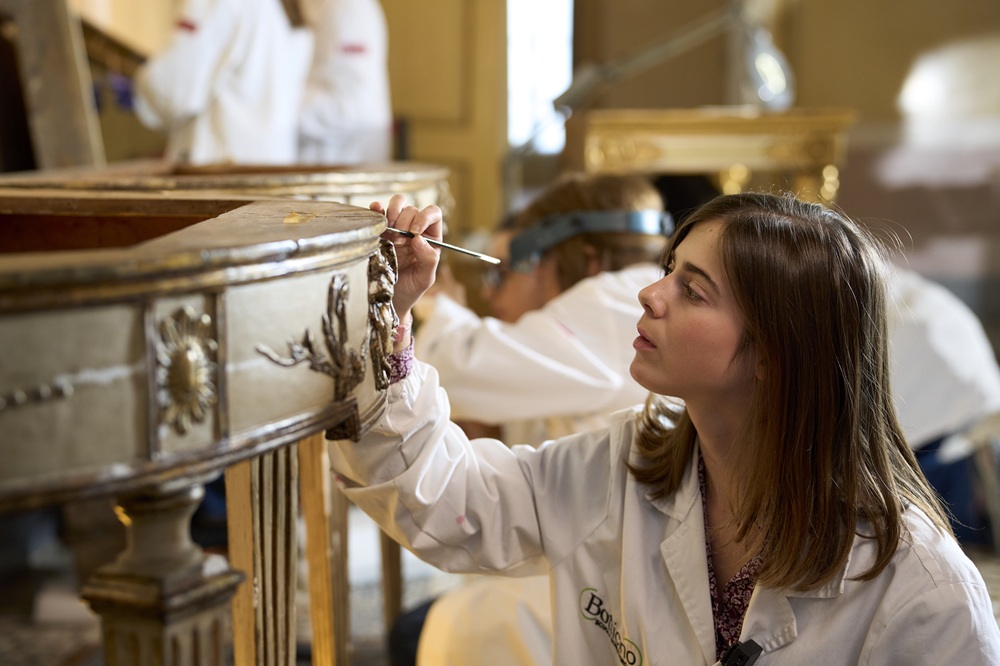
Amura is keen to stress one point: “Our curriculum is very rigorous, demanding commitment and, yes, hard work, both in theory and in practice. Students are involved in major projects, in ever greater numbers.” In its everyday work, the school finds “an invaluable sensitivity” within public institutions, he continues, expressed through collaboration and a willingness to exchange ideas: “I believe this relationship is very positive. We develop productive cooperation with the public sector which, viewed more broadly, helps make the Italian system a model of excellence worldwide.”
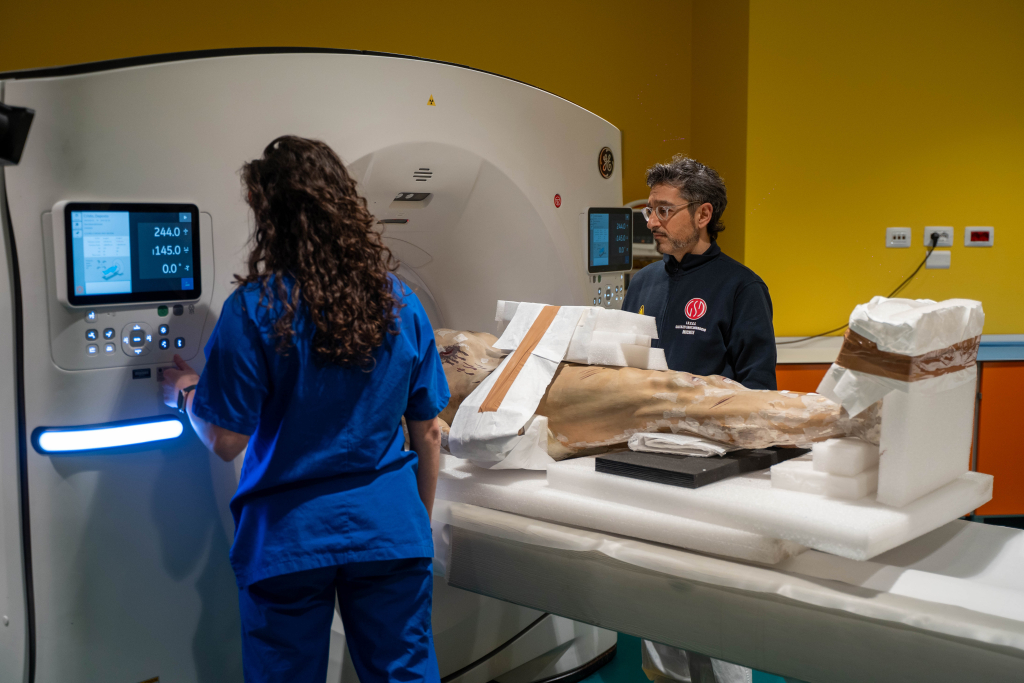
As suggested at the outset, innovation and technology contribute to this rigorous approach, extending the possibilities for planning treatment: working groups expand to include other professionals, resources are used more efficiently, and environmental impact is reduced. One example is the collaboration with IRCCS Ospedale Galeazzi–Sant’Ambrogio and the University of Milan, through which diagnostic tools such as CT scans and radiography are applied to artworks, allowing their internal structure and materials to be examined without invasive investigation.
Laser technology is among the methods used to clean works of art, applying high-energy light to the surface under treatment to remove deposits or surface layers selectively. Then there are bacteria employed as “restorers”: specific bacterial strains, often introduced into inert gels, whose metabolic activity removes particular organic or inorganic substances deposited on objects. This technique, known as biocleaning or biorestoration, can reduce or, in some treatments, eliminate the use of certain solvents and conventional chemical methods, helping to protect both the environment and restorers’ health.
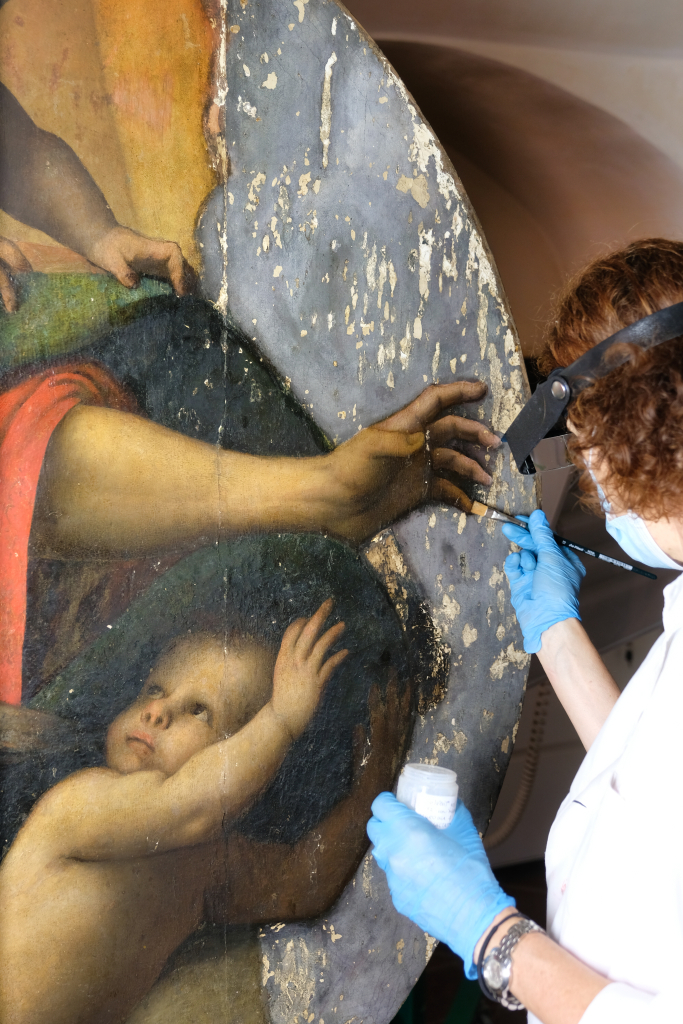
The school’s “toolbox” also includes seaweed. In particular, it uses funori, a polysaccharide extracted from algae of the genus Gloiopeltis, traditionally employed in Japan as an adhesive and consolidant. It can secure the paint layer without recourse to synthetic resins or chemical adhesives. These are, broadly speaking, sustainable methods in which microorganisms and natural extracts assist specialists in conserving cultural heritage. Finally, inevitably, there is artificial intelligence: the teaching staff includes a specialist in algorithms that can help classify materials and simulate different treatment scenarios.
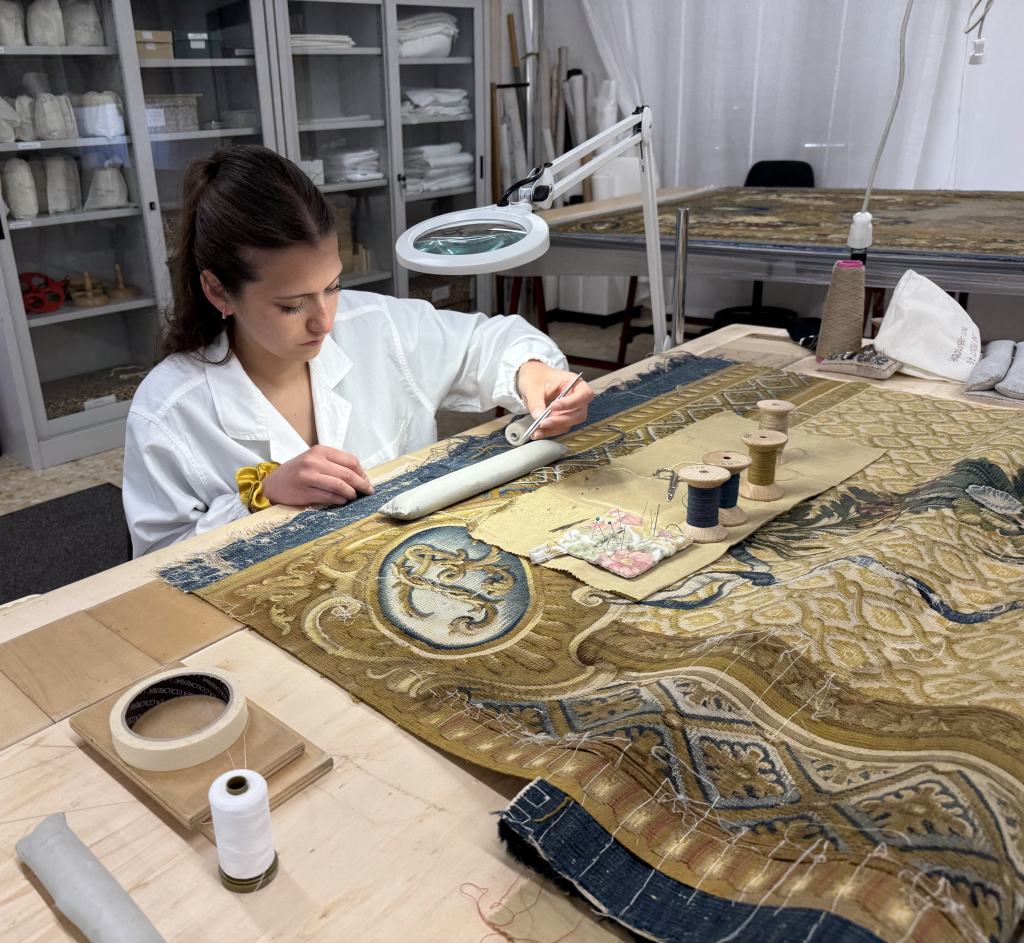
The Botticino school’s scope is broad, encompassing three areas: stone restoration, which includes frescoes, mosaics, decorated architectural surfaces, marble, and sculpture; the restoration of paintings, old canvases, wooden furniture, design objects, and contemporary art; and textile restoration, covering antique carpets, fabrics, tapestries, clothing, hides, and leather.
This last field was a venture that, as Amura explained in an interview published in Lampoon a couple of years ago, “was worth undertaking in a fashion capital such as Milan. Conserving and restoring historical clothing, textiles, and accessories means preserving not only objects of considerable aesthetic value, but also tangible evidence of different periods. Textile restoration maintains the integrity of garments, allowing scholars, designers, and fashion enthusiasts to draw direct inspiration from the details and techniques found in the original pieces.” With such a broad field of activity, it becomes clear how far the restorer’s role, and the interpersonal skills it demands, extend beyond the usual image of the profession. It involves developing a deeper knowledge of chemistry and physics, engaging with new technologies, and working in teams with engineers, architects, computer scientists, designers, and other professionals to identify the best strategies and solutions. Amura’s final observation concerns a change in perspective: “Over the past ten years, perceptions of the restoration world have changed considerably, because there is now greater curiosity and interest. The idea has gained ground that an object can be given greater recognition, its story told, and made accessible to an ever wider audience. Consider those restoration projects we might call ‘en plein air’, visible to everyone while the works themselves remain accessible to the public. They offer opportunities to learn, deepen understanding, and raise awareness, benefiting everyone, visitors and professionals alike.”
Construction is well underway: by the end of the year, the CCR Heritage Research building will be completed and ready to receive scholars, equipment, and works to be studied and restored. We are just outside Turin, at the Centro Conservazione e Restauro “La Venaria Reale” (CCR), on the site of its new scientific hub for research and diagnostics applied to cultural heritage.
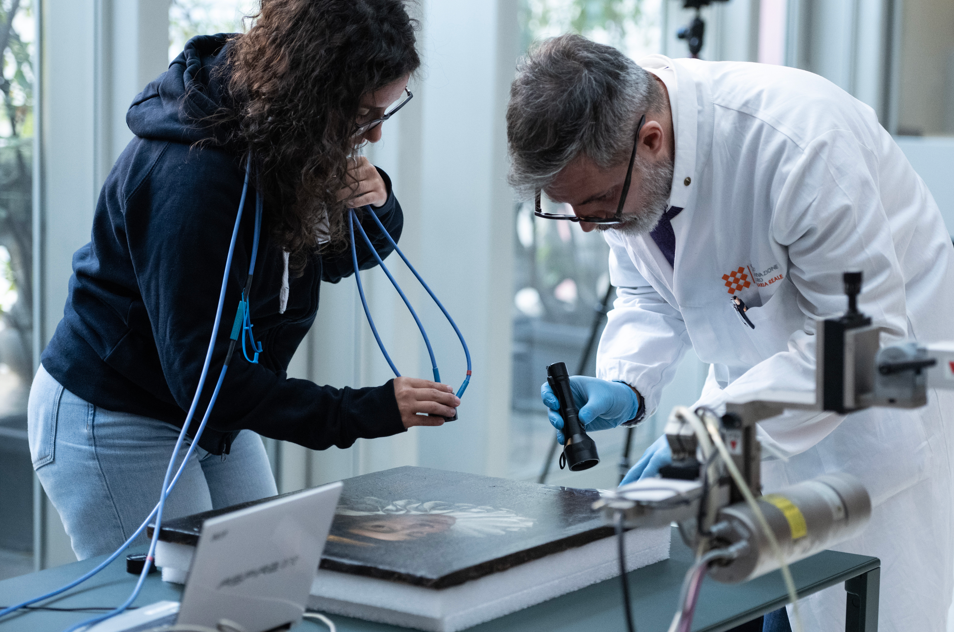
The building will cover 600 square meters over two floors, with state-of-the-art laboratories equipped for spot analysis, mapping, and surface imaging. Mobile and portable instruments will also be available for in situ diagnostic campaigns, studying objects that cannot be moved from their current locations or from which samples cannot be taken.
“The new hub will allow us to expand our space and, in time, acquire the means to develop further opportunities in research, training, and conservation,” says Michela Cardinali, director of the Restoration Laboratories and the School of Advanced Training and Study (SAF). “It could become a kind of incubator for new opportunities, supporting all the work of investigation and understanding carried out through our nine laboratories, while also contributing to the design of treatments and diagnostic programs geared towards long-term conservation. This is a particularly important subject for us, one we have worked on since the Center was founded.”
Inaugurated in March 2005, the CCR is a point of reference on the national and international cultural scene. It understands restoration in the most contemporary sense of the term: as the outcome of an interdisciplinary dialogue between science and the humanities. It is a highly specialized working center, as well as a place of training and research. Alongside its nine restoration laboratories, each specializing in different materials, it has advanced scientific laboratories and a school accredited to deliver the University of Turin’s master’s degree program in Conservation and Restoration of Cultural Heritage.
“Our laboratories allow us to undertake specialist work on many types of objects. In every field, the diversity of materials and the broad chronological span bring us into contact with very different works and contexts. Over time, we have identified strategic lines of research that have enabled us to acquire specific expertise and develop an identity of our own. One example is preventive conservation in historic residences converted into museums. It is a complex field: objects are often displayed without protective cases, in settings that retain a strongly evocative atmosphere. We therefore need to consider both the objects and the contexts in which they are placed. “We have also built up experience in Asian art, ancient Egypt, panel painting, the Renaissance in Piedmont, and the conservation of sixteenth-century tapestries. In recent years we have also worked extensively on ethnographic and anthropological heritage: objects that tell the stories of civilizations and traditions. This work has led us to reflect on the intangible aspects of culture, and on ethical and methodological questions that have yet to be fully explored. In some cases, we have dealt with human remains and archaeological finds involving them, asking questions that go beyond the technical choice of treatment. When working on ancient Egyptian mummies, treating their wrappings and bodies, we asked ourselves how far it was appropriate to intervene, by what means, and for whom we were doing this work.”
Further questions now join those restorers routinely ask—why intervene, and how—as Cardinali explains: “Conservation is no longer simply an activity that preserves an object. It is also a discipline that examines its own purposes, the values embodied in the work, and the meaning of our choices. We ask ourselves: what do we want to give back to society?” While the familiar image of the restorer remains that of one person, or a few people, concentrating on a painting with a brush in hand, the reality is far more complex: “The ability to solve problems, connect information, and collaborate with everyone involved in the process is important. Alongside specialist, or ‘vertical’, expertise are transferable skills, the so-called soft skills: knowing how to listen, work with others, propose solutions, and take responsibility. These qualities are useful in any profession, but become especially significant when working on a unique object.”
The process of understanding a work has also become more elaborate: “We gather technical and art-historical information; we examine the material and the changes it has undergone over time; and we also try to anticipate what might happen if the work were exposed to particular risks. The restorer’s profession rests on a more complex process of reflection than in the past, because society as a whole is more complex, and the objectives we are asked to meet are more ambitious.” It is within this framework that the principle of prevention, mentioned at the outset, takes its place: “Almost all materials change or deteriorate over time. This makes it important to encourage ongoing activities that reduce the risk of alteration and loss, allowing us to pass heritage on to future generations in the best possible condition. For us, being able to prevent a loss has become an ethical principle. The Center has embraced these values and seeks to promote long-term conservation plans, together with monitoring initiatives and scheduled maintenance. We have worked with royal residences, FAI, museums, and archaeological sites. This has become a recognizable feature of our approach to conservation. We are not alone in working in this direction, but the CCR has pursued it consistently since its earliest years.”
Its history is relatively recent—the Center has twenty-one years of work behind it—but its achievements are widely recognized, including in training: “We receive many applications for admission to the degree program, which has a limited intake of twenty-five students a year. Applications are increasing, despite the many accredited courses now available in Italy. The variety of works students encounter and the availability of recognized training pathways make the CCR particularly attractive to those wishing to enter the profession. But it is not only young people who turn to us: we receive requests for collaboration from institutions and established professionals who want to keep their knowledge up to date and continue developing their skills. For us, this is further recognition from the community and the institutions with which we work,” Cardinali concludes.
3 November 2026

