
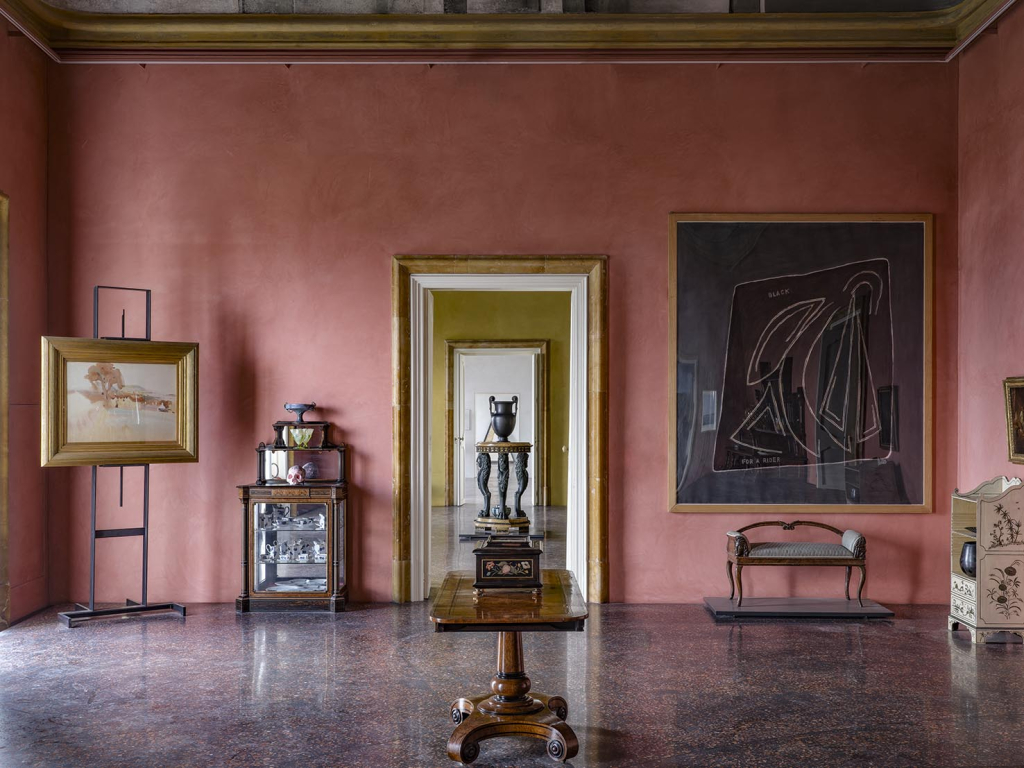
Palazzo Butera, in the heart of Palermo, is not a museum like any other. Crossing the threshold of this seventeenth-century palazzo, one does not get the impression of entering yet another private collection born out of self-representation or institutional display. On the contrary, every room conveys the living trace of a deeply personal and intellectual journey: that of Massimo and Francesca Valsecchi. Their vision of collecting—capable of weaving a dialogue between ancient and contemporary art, philological rigour and experimental impulse, curiosity and passion—has shaped a space that is simultaneously a home and a public venue. We met them to follow the thread of an adventure that began long before Palermo.
Massimo, let us start from the very beginning. In a previous interview, you mentioned your banking ancestors, including Ottavio Costa, a prominent collector and patron of Caravaggio. Did this family history influence your sensitivity toward art? Have you ever felt part of a collecting “destiny”?
In truth, my life in art developed independently of family ties. My beginnings are rooted in the Genoa of the early 1960s, specifically with the Bertesca gallery—which I directed from 1971 to 1973—and the gallery I subsequently opened in Milan in 1974, as well as my connection with figures like Claudio Costa. The gallery was the filter through which I approached contemporary art; it was an excuse to collect, to work with artists, and to engage in dialogue with them. I have always sought a direct rapport, and figures such as Anne and Patrick Poirier, David Tremlett, Tom Phillips, Gilbert & George, Elisabeth Scherffig, and Eugenio Ferretti were fundamental to me.
Do you remember the first piece you purchased together?
Yes: a group of Daum Art Nouveau glass vases from the late nineteenth century. We were returning from Germany with Claudio Costa and found them in Alsace. They are still at Palazzo Butera today. It was the mid-1970s, and that is where our collecting journey truly began. We never followed a conventional methodology. Our collecting stems first and foremost from curiosity—from a desire to explore less-trodden paths of European history, to record innovations and cross-connections. Following that first acquisition, and with our move to London, our perspective on art underwent a fundamental reorientation.
In what way did London transform your approach to collecting?
In London, we met connoisseur-antiquarians who provided us with the foundations of specialised knowledge in porcelain, nineteenth-century English furniture, and the decorative arts. Figures like Martin Levy and Errol Manners were essential interlocutors. It was from there that the combinatory play characterising our collection was born: establishing relationships between highly diverse objects—a Pre-Raphaelite piece of furniture, an eighteenth-century watercolour by Francis Towne, an African mask, a piece of Meissen porcelain. The goal was to build a sort of compact encyclopedia of the European spirit: Europe seen as a metaphor for the world, a place where, in just three centuries, cultural exchanges and scientific and technological innovations transformed the globe. The collection chronicles precisely this dynamism.
I imagine London was also crucial for training your eye?
Undoubtedly. London was my real school. In the 1980s, the market was extraordinary: every day we visited galleries and dealers, attended every auction, and viewed thousands of works. I would make an initial selection, present the pieces to Francesca, and then we would decide together what to acquire. Our eye was formed in this manner, through daily practice.
Is it this very same eye that led you to rediscover Christopher Dresser?
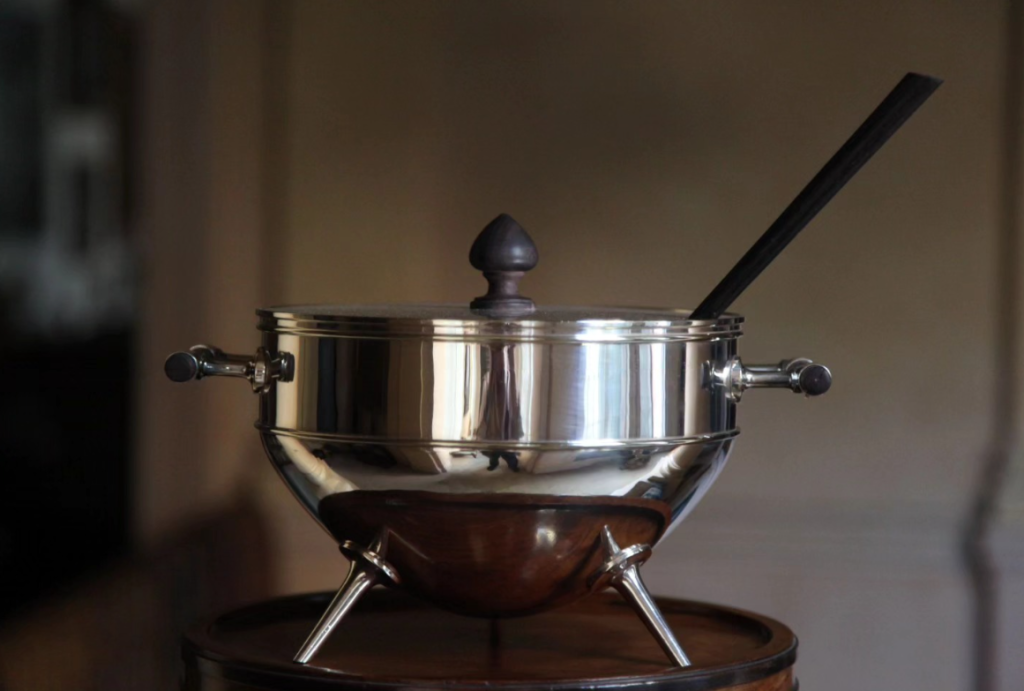
The starting point was our relationship with the English art scene and with figures like Michael Whiteway, a scholar-dealer. In England, there are revolutionary figures who have been entirely forgotten, even within their own country. Before the 2002 exhibition at the Triennale in Milan, Dresser was practically unknown—even today, the precise location of his grave remains uncertain, likely a pauper’s grave in Alsace. Yet he was an extraordinary pioneer: the only English architect to travel to Japan between 1860 and 1870, when the country was still closed to foreigners. He visited four hundred manufacturers, published a seminal book on the subject, and upon his return designed objects—coffee pots, milk jugs, furniture, armchairs, chairs—that anticipated the Bauhaus and contemporary design.
A forgotten visionary…
Yes, and our work has been to place him within a lineage that starts from the late eighteenth century—with George Bullock and Pugin the Elder—extends to Godwin, and culminates in Modernism. Our collection aims to help fill these gaps in the history of the decorative arts.
In 2015, you left your home in London and relocated both your residence and the collection to Palazzo Butera. How did this transition come about?
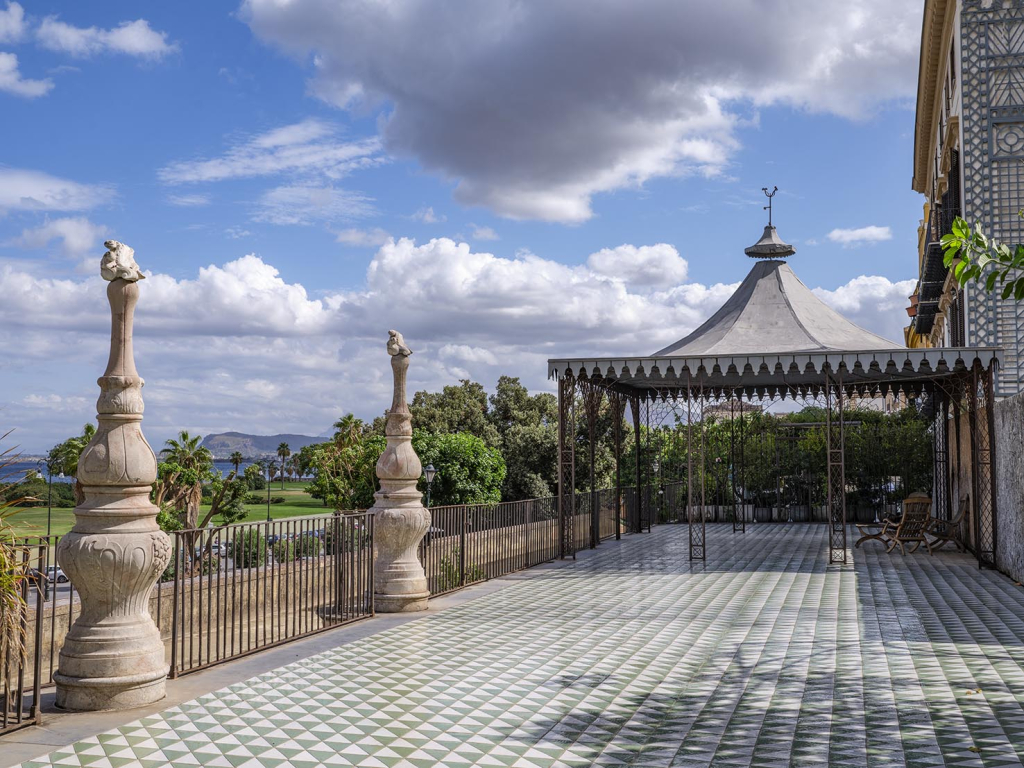
The choice of Palazzo Butera happened entirely by chance. I accompanied a friend who was house-hunting and found the city to be extraordinarily beautiful. At that point, I told Massimo to come to Palermo, and eventually we discovered the palazzo and decided to buy it. For twenty years we had been trying to finalise a project in Milan, which never came to fruition. We wanted the collection to find a context genuinely capable of welcoming our ideas. It did not work out in Milan, nor in Cambridge or Oxford, where we loaned works from 2016 to 2020.
Why Palermo, specifically?
Palermo is a city on the margins of the great financial systems, not yet flattened by uniformity. It is a city full of possibilities.
The restoration project of the palazzo was monumental. How did your sensitivity as collectors guide the recovery of the building?
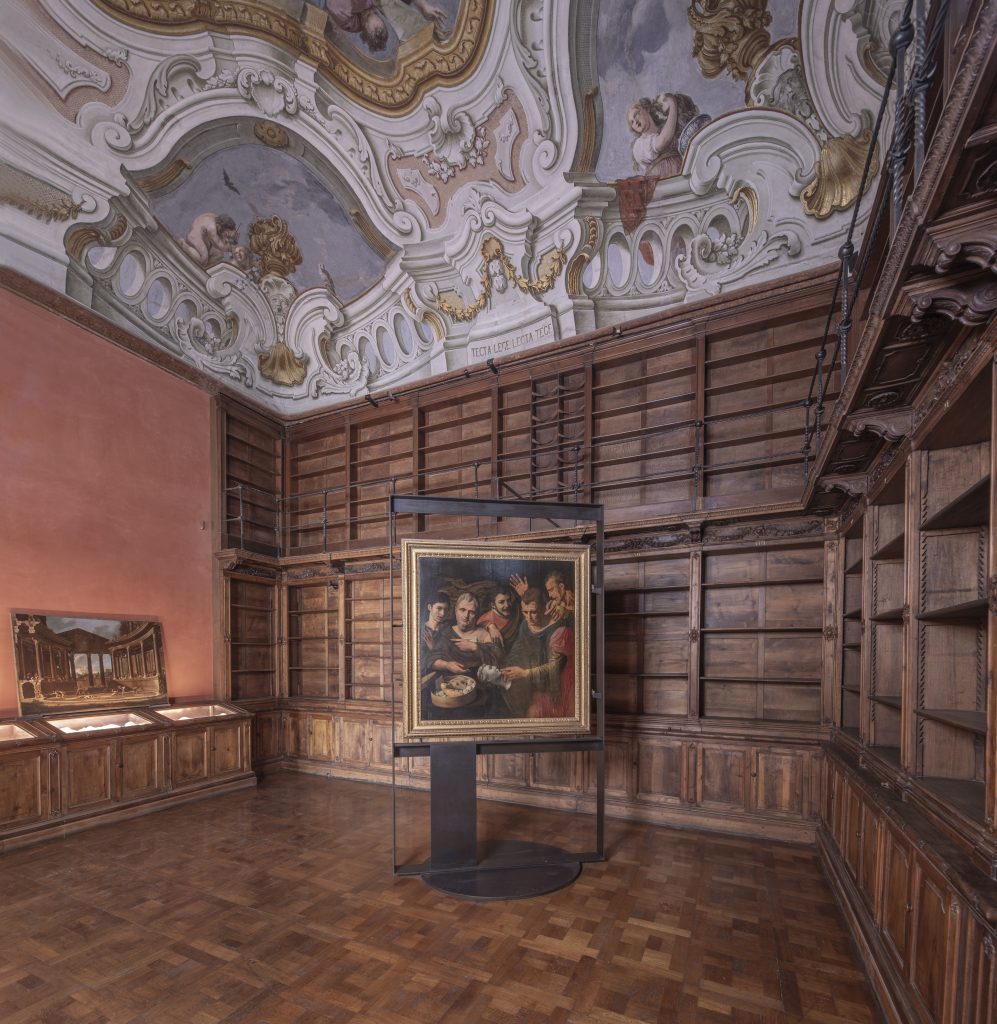
The restoration begins from a philological reconstruction, followed, however, by a deliberate attempt to “forget” philology in order to display the collection as it would be in a home. The arrangement of the works is our language. The displays bring to light the personalities of the artists, far removed from traditional museum models. There are no chronological or thematic arrangements, nor any captions.
What is your relationship today with art critics and historians?
We have never had advisors in the proper sense, but our relationships with scholars like Giuliano Briganti and Federico Zeri were very important. Rather than allowing ourselves to be guided, we sought to steer them toward the themes that interested us.
Today, many major cultural projects stem from private initiative. In your opinion, what does this phenomenon reveal?
The history of art has always been nourished by collectors: great museums derive from great private collections. Perhaps what is lacking today is the capacity to recognise the collectors of our own time and to establish a genuine dialogue with them.
Is there a specific work at Palazzo Butera that you would advise visitors not to miss?
Every single one — without exception.
3 June 2026