
Venice, March 5, 2026. The Doge’s Palace opens its doors to “Etruscans and Veneti: Waters, Cults, and Sanctuaries,” the first archaeological exhibition hosted within the rooms of the Doge’s Apartment. Present at the inaugural ceremony are the Minister of Culture Alessandro Giuli, the Mayor of Venice Luigi Brugnaro, the Regional Councilor for Culture Valeria Mantovan, and the President of the Fondazione Musei Civici di Venezia, Mariacristina Gribaudi. Over seven hundred artifacts—many previously unseen, some from recent excavations—reconstruct the role of water as a sacred space within the two great pre-Roman civilizations of first-millennium BC Italy. Among the partners of the initiative is the Luigi Rovati Foundation, working alongside the Fondazione Musei Civici di Venezia.
It is a sign of the times. Indeed, the case of the Luigi Rovati Foundation is an extraordinary one. This is not so much due to the financial and intellectual resources that Lucio Rovati and Giovanna Forlanelli have chosen to allocate to a purely philanthropic project, but rather for the mindset that distinguishes them. For instance, as recalled in Maastricht during a talk dedicated to the Foundation by TEFAF—in the presence of Federico Mollicone, Chairman of the Culture, Science, and Education Commission of the Chamber of Deputies, and the Italian Ambassador to the Netherlands, Augusto Massari—the museum is designed to be a dynamic entity, despite being dedicated to the Etruscan civilization.
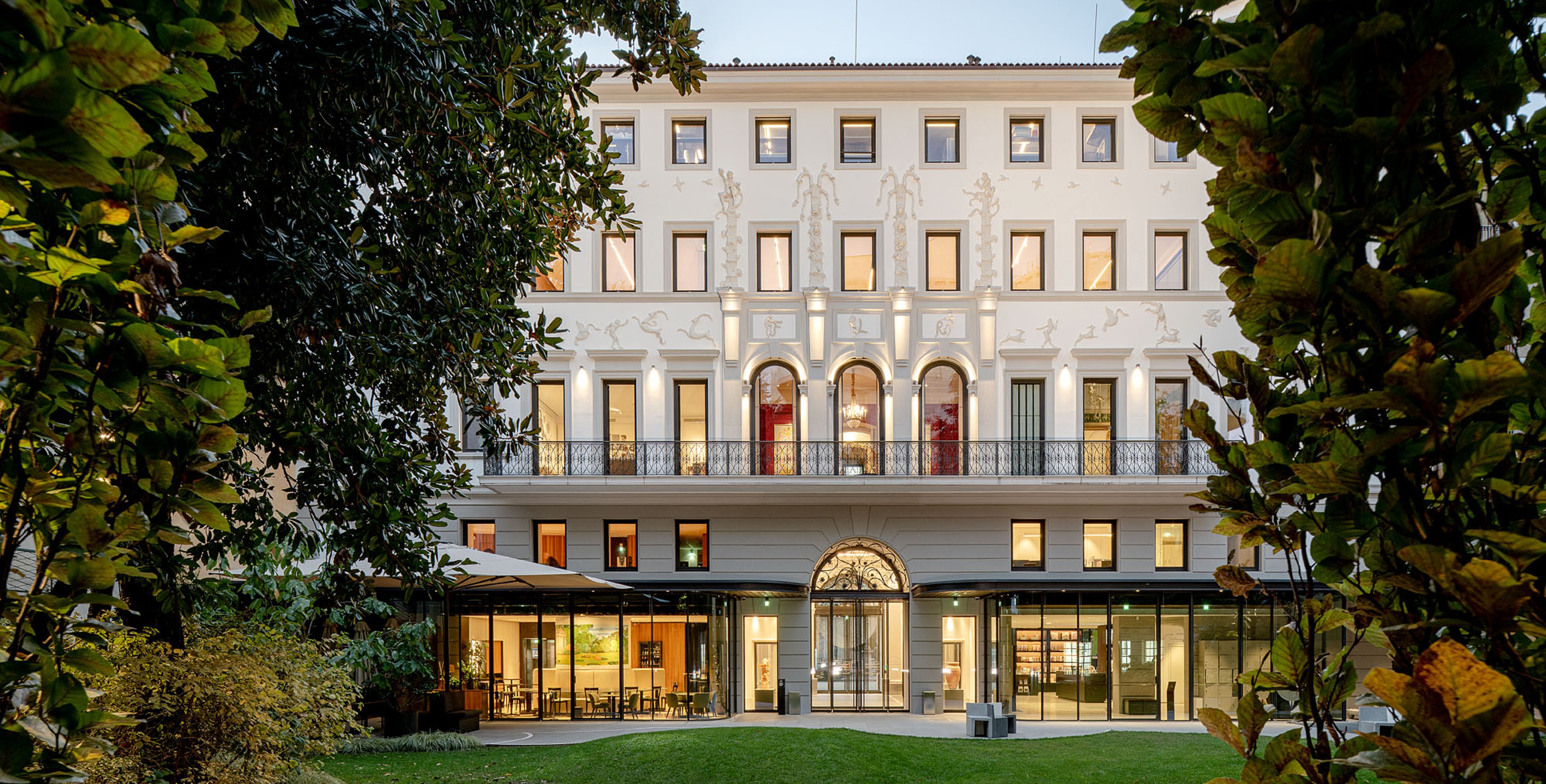
“People must have a reason to return to the museum,” says Rovati, “and it is vital to be able to build relationships with other institutions.” It is not enough to simply preserve and display; one must also be able to connect, bringing a specific culture into the present and ensuring its dissemination. Not a static monad, then, but a porous and relational entity, perhaps also thanks to the support of science. Drawing on the Rovati family’s activity in the pharmaceutical field, the Foundation promotes studies to provide scientific evidence for the benefits that a museum visit can produce. Much like sports, which Lucio Rovati also practices and experiences with passion. Thus, the discourse finally moves away from the treacherous “tourism question” to return to its most authentic and elevated value: education. Cultural heritage should not serve to create more restaurants, but better restaurateurs and customers capable of choosing with discernment.
Let us delve deeper into this vision with the other half of the Foundation, Giovanna Forlanelli.
Since September 2022, the Luigi Rovati Foundation has produced twenty-six exhibitions with surprising programmatic consistency. Well begun is half done…
Giovanna Forlanelli: Consistency is everything. Before creating the Foundation, we looked around and tried to understand who we were and what we were interested in saying. I, as you know, founded the Johan & Levi publishing house, and my interest has always been directed toward modern and contemporary art. My husband, Lucio Rovati, has instead a great passion for archaeology, particularly Etruscan art. The consistency perhaps stems precisely from this: from having sought to harmonize two identities.
However, collecting Etruscan art is quite different from collecting contemporary art.
Giovanna Forlanelli: Completely different. With contemporary art, one can adopt a freer approach: you support young artists, you experiment, you build a vision over time. In the field of ancient art, however, improvisation is much more difficult. Without solid expertise and the support of specialists, navigating the landscape becomes complex.
Archaeology requires even greater diligence, especially regarding the necessary documentation for the provenance of the artifacts. For a collector, it is essential to have the certainty that every piece can be acquired and subsequently exhibited without complications—a point of particular importance when the purchase is made abroad, as was the case for part of our collection.
For this reason, one relies on a few key gallery owners, professionals with extensive experience and recognized scientific reliability. Reconstructing the provenance and the collecting history of an artifact is not always straightforward: during the twentieth century, many collections or individual pieces were alienated by their owners, sometimes due to economic necessity or a lack of interest from heirs, and thus flowed into the antiques market. To this, one must add the dispersions caused by wars, undeclared finds and discovery rewards, and major events such as the flood in Florence, which resulted in the loss of vast amounts of documentation.
So, not everything on the market comes from tombaroli (tomb raiders).
Giovanna Forlanelli: Unfortunately, a clandestine market for archaeological goods does exist, and it is countered by the Carabinieri Command for the Protection of Cultural Heritage. But that is not what concerns us.
In Italy and abroad, there is a legal market where artifacts are accompanied by adequate provenance documentation. We have always prioritized galleries and operators that are also frequented by major Italian or international museums, and who participate in fairs where the verification processes are particularly rigorous. Events such as Frieze Masters or TEFAF Maastricht employ extremely strict vetting procedures: committees of independent experts, often museum directors or curators, examine every object before it is displayed.
In the 1980s and 1990s, major international auction houses like Christie’s and Sotheby’s held frequent antiquity sales. Today, these have significantly decreased, partly because there are fewer and fewer objects with a significant pedigree. In Italy, it is sometimes possible to identify notified private collections (meaning those deemed of national interest and therefore non-exportable), which may be transferred between private individuals if the State does not exercise its right of pre-emption. The Cambi and Cremonini collections fall into this category.
How did the decision to build a museum in Milan come about?
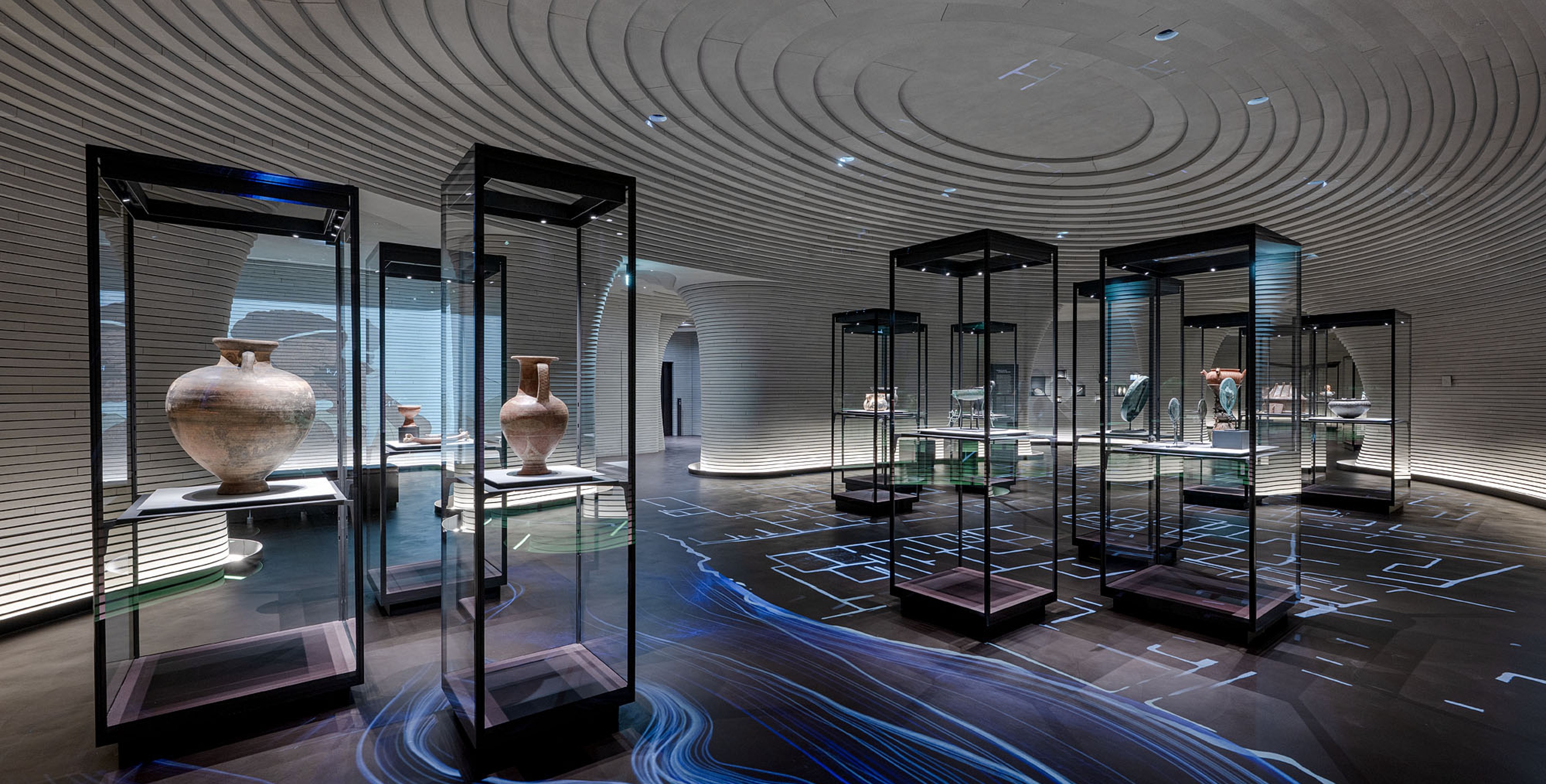
Giovanna Forlanelli: The story begins in 2016, when we acquired the Cottier-Angeli collection, which had already been partially studied and published by Giovanni Camporeale. It was the collection of a couple from Geneva who, over forty years, had assembled about seven hundred pieces, including impasto and bucchero pottery: a critical mass sufficient to begin imagining a museum. But it was still not enough. Thus, in parallel, we acquired the two aforementioned collections—collections formed over time and returned to the market by heirs. In the world of collecting, this is a recurring pattern.
Indeed, contrary to what Bruce Chatwin used to say, opportunities for collectors do not only arise from wars and major crises. However, initially, you had considered Monza.
Giovanna Forlanelli: Yes, that was the initial idea. Then we reflected on it, observed the context, and chose Milan. Between 2016 and 2022, we developed the Foundation’s project, renovated the building (palazzo), and commissioned the contemporary artworks for the piano nobile (noble floor). The museum opened on September 7, 2022. Today, the Foundation is enrolled in the Single National Register of the Third Sector (RUNTS), and the museum is recognized by the Lombardy Region and accredited to the National Museum System.
To date, you possess approximately five thousand artifacts. How does one manage a collection of this size?
Giovanna Forlanelli: With rigor and clear choices. It is necessary to give the collection a shape, and this shape must respond to a precise vocation. When something truly exceptional is presented, or when there is an opportunity to bring an artifact of high cultural value back to Italy, we proceed with the acquisition. At the same time, we collaborate with public Italian and international museums, developing exhibition projects either independently or in partnership.
The case of the cippo (boundary stone) perfectly illustrates this mechanism, doesn’t it? Could you tell us about it?
Giovanna Forlanelli: The case of the cippo is emblematic. It is a rare marble boundary stone from the 1st century BC, which had already been published in the 18th century in Thomas Dempster’s volume on Etruscan art. It was kept in the country house of a Tuscan family who had discovered it on their land in the 19th century. Our curator, Giulio Paolucci, managed to track it down, and we acquired it from the heirs. It is a sculpture known for three centuries but never before exhibited to the public; now, it will be among the works presented in the major exhibition on the Etruscans at the Fine Arts Museum of San Francisco.
Your thesis is that the market for Etruscan art is impracticable in Italy, unlike what happens elsewhere.
Giovanna Forlanelli: The problem is structural. In Italy, there are no galleries specialized in archaeology because archaeological heritage—whatever lies beneath the soil—is property of the State. The regulations are very strict: the Code of Cultural Heritage requires anyone possessing an archaeological object to prove legitimate provenance predating 1939. Consequently, those who own inherited objects lacking adequate documentation tend not to declare them. Some Italian auction houses occasionally offer historical collections or single artifacts, but without continuity.
Is there room for change?
Giovanna Forlanelli: In the art market in general, the reduction of VAT to five percent represents an important signal [Ed: we discussed it here, link]. At this moment, we have the lowest rate in Europe. In the global geography of markets, London has lost much ground after Brexit, while Paris is growing. Instability in the Gulf region is putting new markets in that area at risk. Italy, and Milan in particular, could seize this new phase. However, archaeology remains largely outside these dynamics.
The relationship between the Foundation and public institutions—how would you describe it?
Giovanna Forlanelli: It is a relationship built with patience, but today it is solid. We have collaborated with MART in Rovereto and now with the Doge’s Palace in Venice. Building a private museum with a genuine public function facilitates dialogue with public institutions. The issue, if anything, is geographical: Rome is far from Milan. The human element remains decisive, and personal relationships with those operating within the institutions make the difference. In recent years, there has been increasing recognition of the role of private institutions. A few days ago, the “Italia in Scena” bill was definitively approved, promoting horizontal subsidiarity—meaning the contribution of private individuals to the management and valorisation of cultural heritage.
The Foundation holds a specific position on the archaeological object. You do not see it merely as an artifact to be classified, but as a work of art to be seen. A cultural choice, even before an aesthetic one.
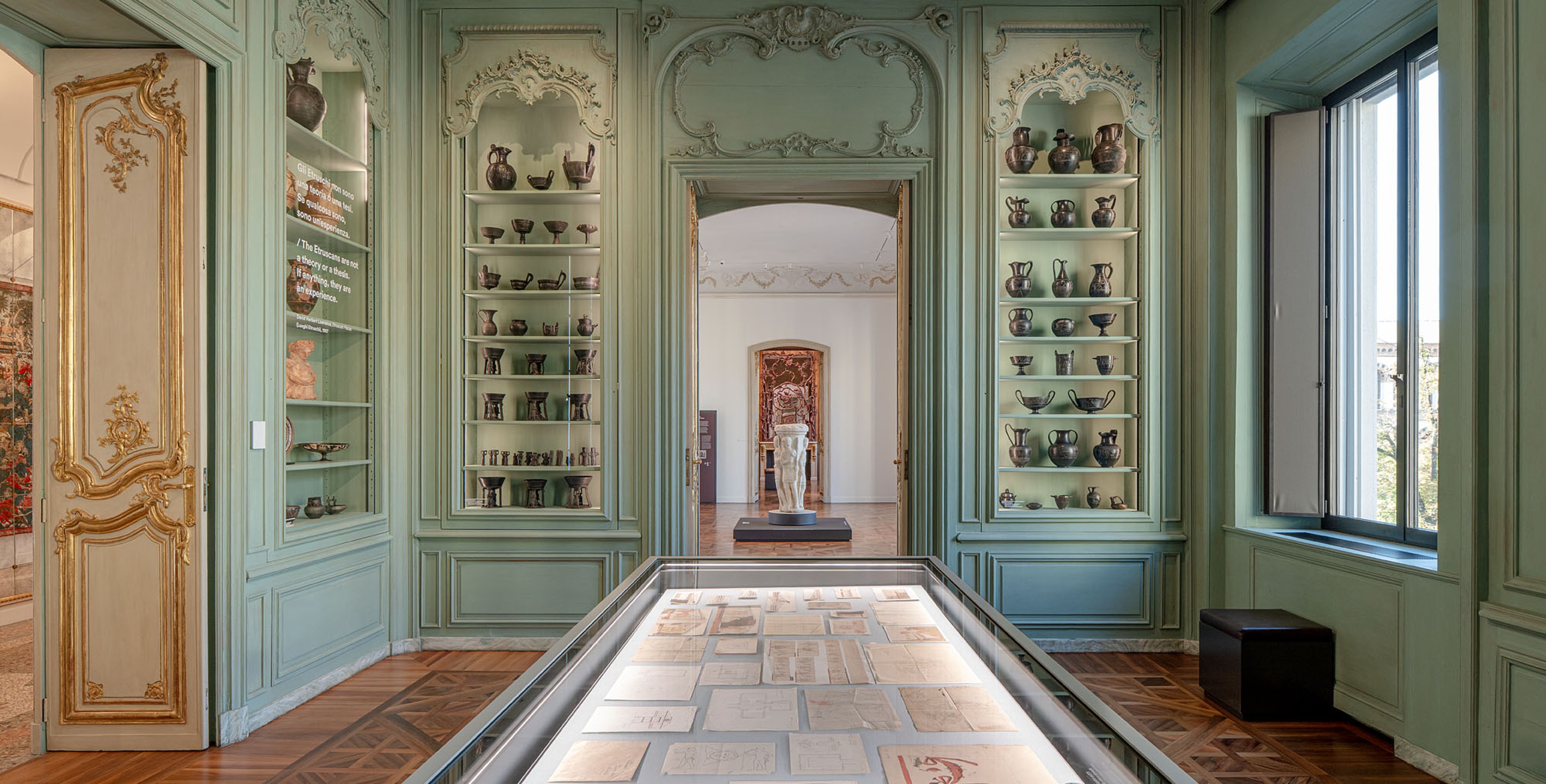
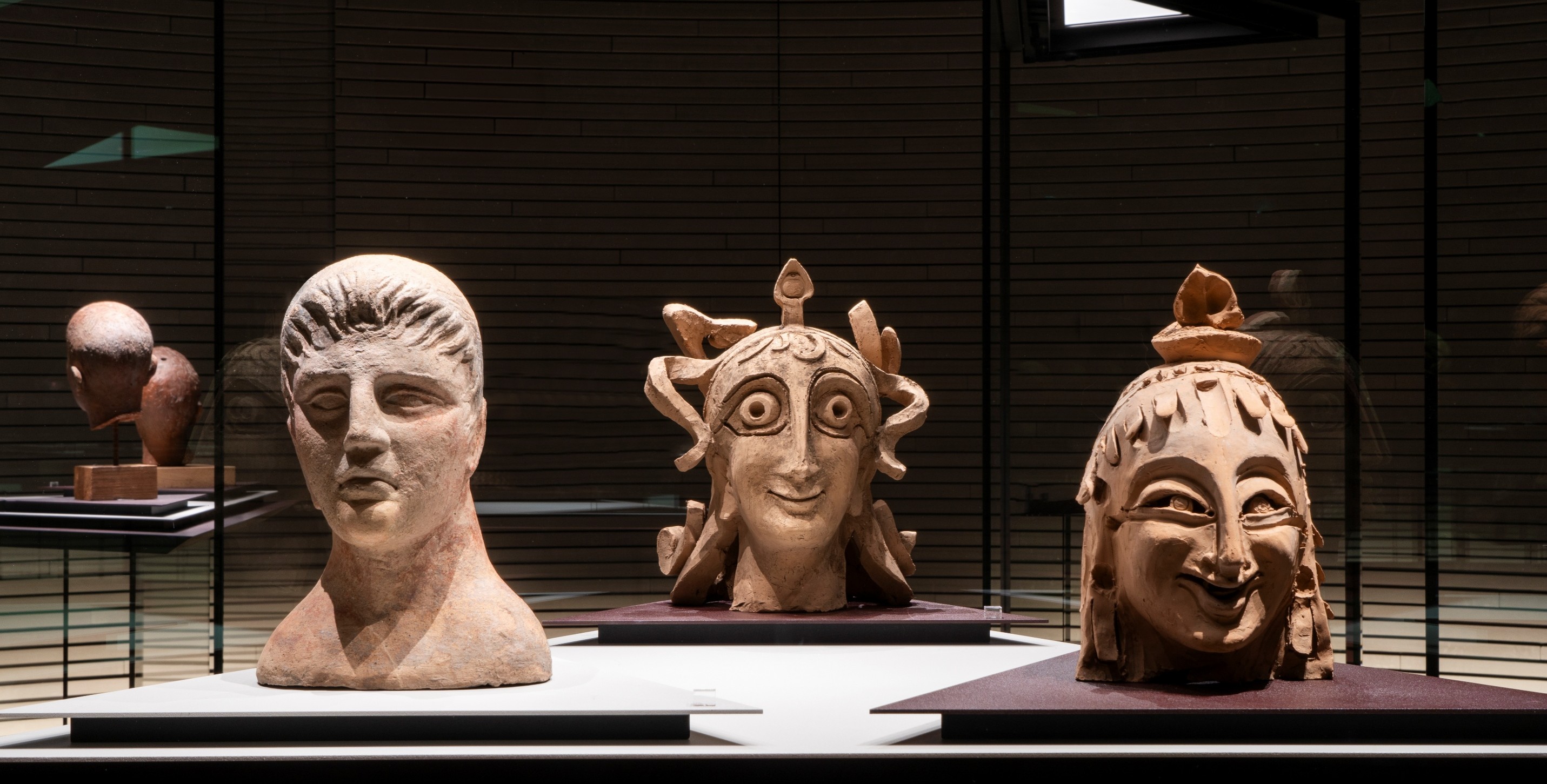
Giovanna Forlanelli: Exactly. The archaeologist considers it primarily as material evidence of the past, and the excavation context is fundamental. We do not ignore this value, but we also look at the object itself. An Etruscan vase, a bronze statuette, a cippo are works of art in every respect: they possess a formal quality, a message, and a capacity to evoke emotion.
And from this stems the “Warburghian” approach of the museum, as noted by several observers.
Giovanna Forlanelli: Yes. Aby Warburg showed how images and symbols traverse the centuries. In archaeology, we are at the origins of art history, and many signs are universal: the spiral appears in Mesopotamia, in Aztec art, in Japanese and Chinese art; the female figure, the Mater, and anthropomorphic figures transcend every culture. This makes the archaeological object universal and, for this reason, contemporary.
Venice, now. Can we say it is the Foundation’s most ambitious project to date?
Giovanna Forlanelli: In reality, the most ambitious project remains probably the one on the city of Vulci—from a historical-artistic point of view, the most significant, featuring exceptional finds. Venice, however, represents an important milestone: in these four years, we have worked hard to build credibility within the scientific community, and the collaboration with the Doge’s Palace confirms this. The initial idea came from Mayor Brugnaro. Venice lives on water, and everything in the Etruscan civilization related to water—rites, cults, river ports—is consistent with this identity. Even inland Etruscan cities were river ports, as the river was the main communication route. With Giulio Paolucci, we defined the scientific framework of the exhibition.
And then there is the exhibition by Salvatore Settis, “The History of a Gesture.”
Giovanna Forlanelli: An important exhibition, despite its intimate scale. It reconstructs the history of a gesture: the female figure with arms thrown back, a gesture of despair. It appears in Roman art, in a small silver vase from the Archaeological Museum of Naples; we find it again in the scene of the death of Meleager reproduced on the Roman sarcophagus in the Torno collection in Milan. The gesture disappears for several centuries and re-emerges in Giotto, in all probability after he saw this sarcophagus. From there, it traverses the centuries until it reaches Picasso and Guernica. In the exhibition, we also present three of Aby Warburg’s plates dedicated to the gesture of despair.
One last topic: the Italian Pavilion at the Biennale and Chiara Camoni.
Giovanna Forlanelli: It is a story that makes me happy. I have known Chiara Camoni for many years and purchased one of her earliest works. We had already exhibited some of her works in the exhibition dedicated to Castellani jewelry and, shortly before her appointment to the Italian Pavilion, we displayed her Annunciation among the Etruscan votive bronzes in the reinstallation of the permanent collection. Once again, the ancient and the contemporary meet through the choice of a great artist: I could not be prouder.
20 March 2026