Amid the vivid greens, emerald shadows, and bluish reflections of the splendid portrait of the Troubetzkoy children painted by Daniele Ranzoni in 1874, the face of the young Paul at the age of eight emerges within an oval that seems to contain the formative microcosm of the future sculptor: the setting of the greenhouse at Villa Ada in Ghiffa on Lake Maggiore, where he spent his childhood; the bond with his brothers Pierre and Luigi; his affectionate familiarity with Ranzoni; his symbiotic relationship with animals; the effortless naturalness of the poses, the aristocratic elegance, the anti-academic spontaneity, the trembling vitality of the portraits, lively yet veiled with a suspended melancholy; and finally, the dissolution of form into light and colour. These are the elements that would characterize the entire oeuvre of Paul Troubetzkoy.¹
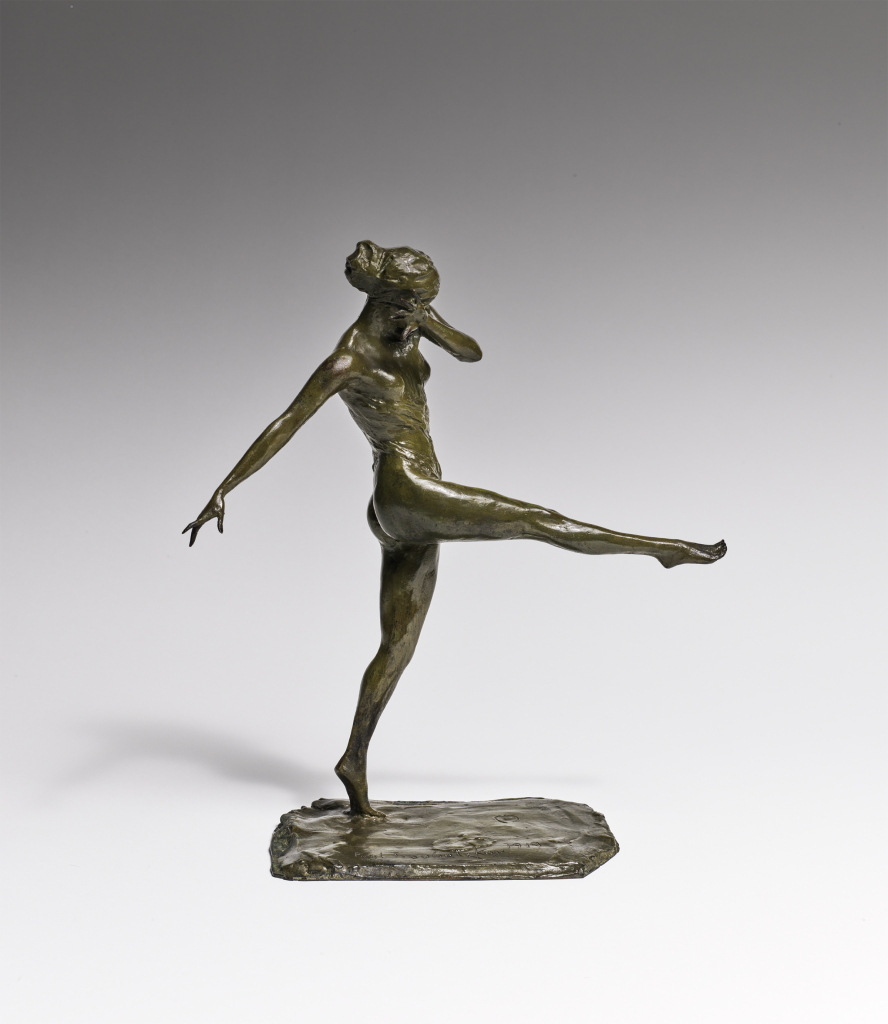
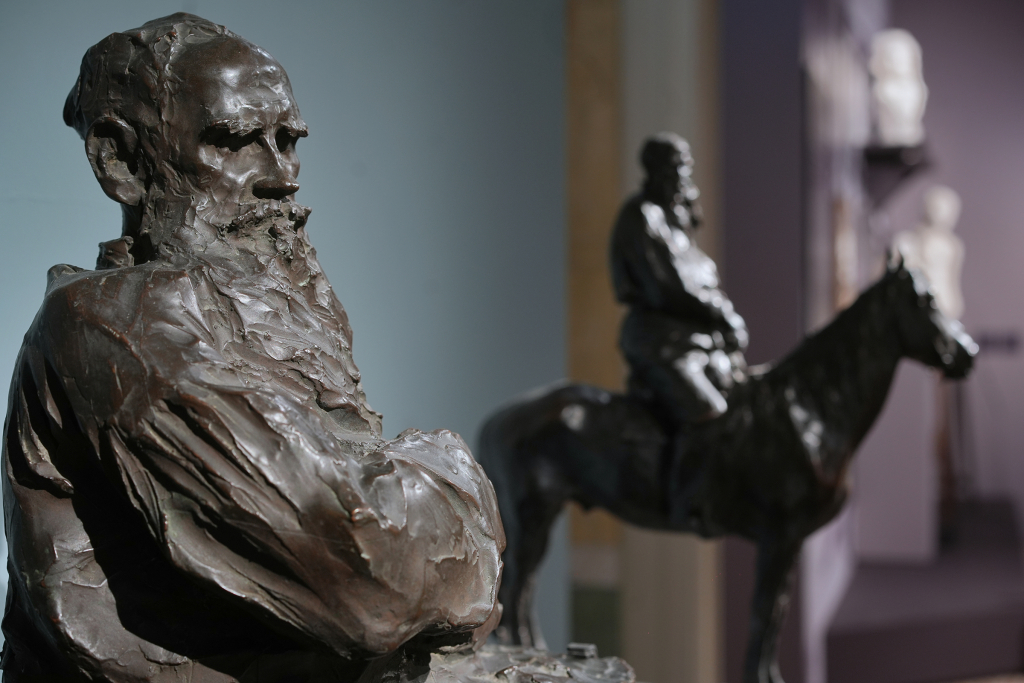
Troubetzkoy—from the kinetic, chromatic qualities of marble and bronze to the sheer mastery of shadow and light, of roughness and delicacy that violently hook or gently hold the light as it settles on soft surfaces—was a self-taught sculptor who could capture the gallop of a horse, the stance of a dog tracking a scent, the coquettish repose of a young lady, or the fresh and sober nudity of a springtime maiden. 2
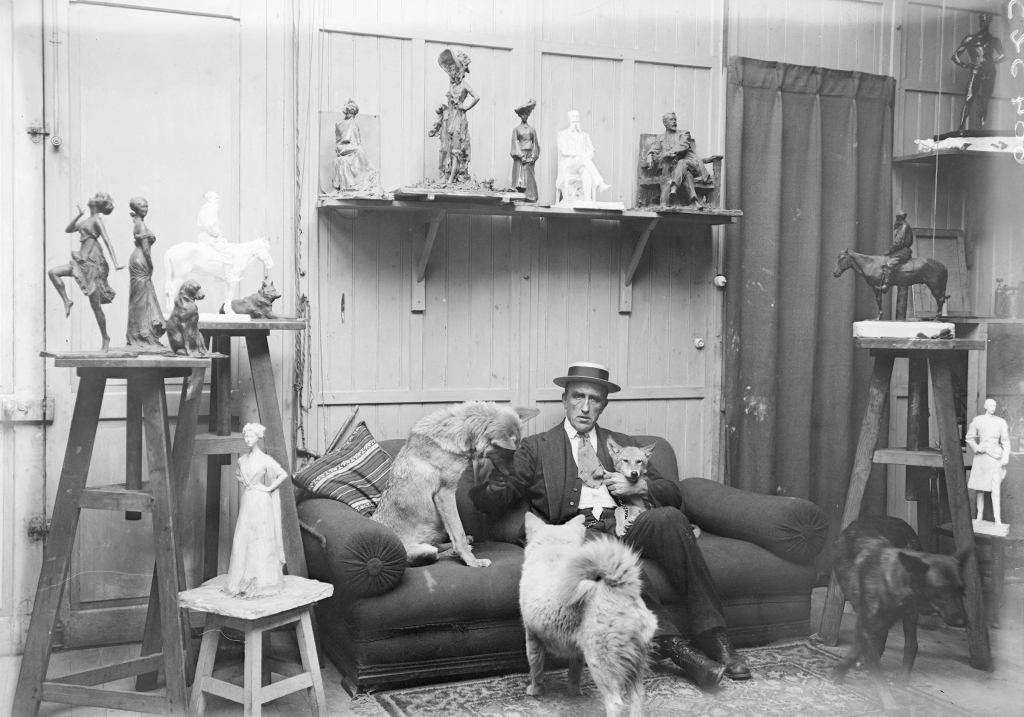
© Albert Harlingue / Roger-Viollet
Heir to a Russian family of ancient nobility, Paul Troubetzkoy was born in 1866 in Intra, on the shores of Lake Maggiore, the son of Prince Pietro, a Russian diplomat posted to Florence (then the capital of Italy), and of Ada Winans, an American opera singer. After their marriage they first settled in Intra and later in nearby Ghiffa, where they built Villa Ada with its large garden overlooking the lake. Thanks to the social life of the area, the family’s connections, and Ada Winans’s voice, the family—despite its noble origins—was little more than comfortably well-off, yet was able to frequent high society: wealthy aristocratic and upper-bourgeois families from Milan and abroad, as well as artists, writers, musicians, and politicians, including Count Orsetti, General Ulysses Grant, the Francfort and Junk families, Eleonora Duse, Alfredo Catalani, and Arrigo Boito. The environment in which Troubetzkoy grew up was therefore one of refined and cosmopolitan culture, in which Daniele Ranzoni played a crucial role, producing numerous family portraits and views of the lake.
Originally from Intra, Ranzoni visited the family regularly from 1871 until 1877, when he left for England, forming a close bond with the young princes. He taught them to play chess and to swim in the lake, built a puppet theatre, tended the villa’s garden, gave painting lessons to Pierre—who would become a painter—and history lessons to the reluctant Paul. “He was always cheerful and lively. He joined in our games, and he himself seemed to enjoy them like a boy,” Luigi would later recall.⁴ It was Ranzoni who introduced the princes to Tranquillo Cremona—who would often stay in one of the park’s chalets—and Giuseppe Grandi, the “trinity of giant dwarfs” of Milanese Scapigliatura. According to a trope echoed in countless similar anecdotes, it was Giuseppe Grandi who first remarked on the precocious talent of eleven-year-old Paul, who had modelled a horse’s head from life.⁵ When, after a faltering school career, Paul moved to Milan in 1884 to become a sculptor, he began in Grandi’s studio, then tried working with Donato Barcaglia and finally with Ernesto Bazzaro, where he lasted only three months.
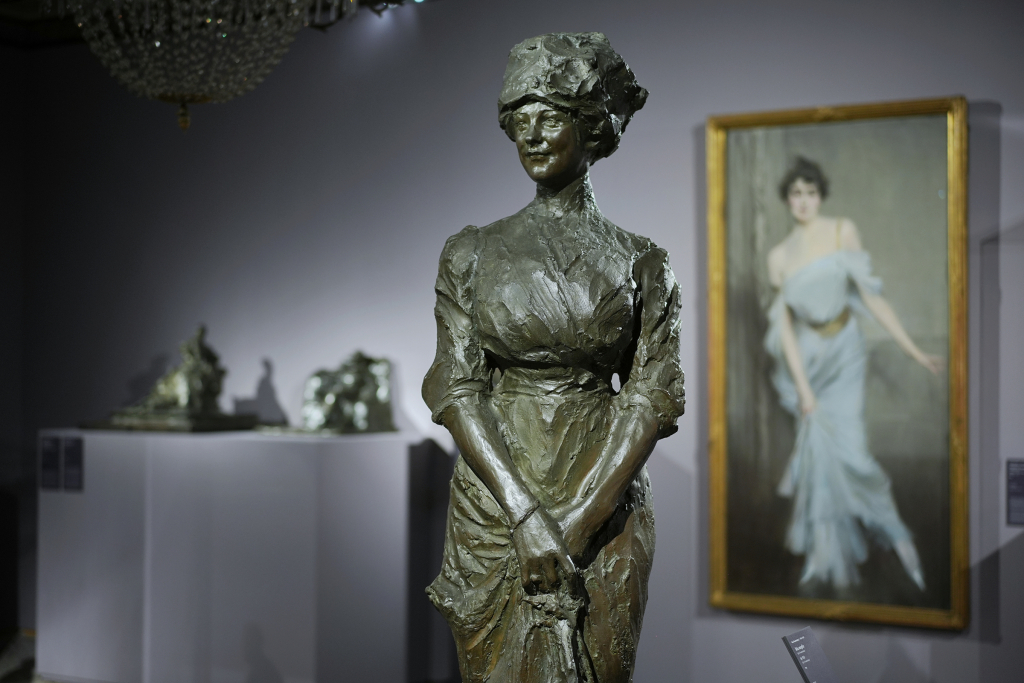
Rebellious toward study and resistant to rules, Troubetzkoy carefully avoided the Brera Academy of Fine Arts, then the most renowned in Italy and an obligatory passage for nearly every artist of the period, even for those who would later oppose its principles. His training instead took place briefly in various studios and, above all, in the lived experience of Milan, “the most city-like city in Italy.”⁷ In the artistic sphere, the great season of the Milanese School of sculpture—which had dominated the previous decades and made the city an international capital of sculpture—had by then exhausted itself in a paroxysmal virtuosity of marble carving, while the new tendencies of social realism were emerging and would dominate the 1890s. But above all, the Scapigliatura—the first fully anti-academic movement in Italian art, intertwining literature, poetry, theatre, music, painting, sculpture, and the applied arts—had dismantled the conventions of bourgeois realism, dissolving form through “a painterly reading of the phenomenon of reality, grasped in its uninterrupted transformation and apprehensible only in fragments, in ‘impressions’.”⁹
By this time Cremona had already died (1878), Ranzoni was isolated by mental illness, and Grandi was absorbed in the obsessive work on the monument to the Cinque Giornate, yet the three had left a profound mark on Troubetzkoy’s formation and on many artists of the next generation, helping to shape a new modern language appreciated by the most progressive bourgeois circles.¹⁰
Editor’s note: the text is taken from the catalogue of the exhibition “Paul Troubetzkoy. The Sculptor Prince”, curated by C. Champy‑Vinas, Omar Cucciniello, Anne‑Lise Desmas, Édouard Papet, Galleria d’Arte Moderna, Milan, 27/02–29/06 2026. Catalogue published by Officina Libraria, Rome, 2025.
- On the painting, see N. D’Agati, in Galleria 2017, p. 175. The youngest brother, Luigi, must certainly be identified as the child on the right; in his own recollections, he identifies Paul as the child in the centre (Troubetzkoy 1952, p. 10), whereas more recent scholarship has instead identified Paul as the one on the left, with Pierre portrayed in the centre. The names of the three brothers vary depending on time and place: Pierre or Pietro; Luigi or Gigi; Paolo or Paul, as seen in their various signatures. The same applies to the father (Pietro or Piotr or Pëtr in Russian) and to the surname.
- Lucini 1908, p. 546.
- Most of the information about the artist’s childhood comes from Luigi’s recollections, written in old age in the 1950s; the manuscript is preserved at the Museo del Paesaggio in Verbania, partially transcribed in Troubetzkoy 1952, Troubetzkoy 1981–1982 and idem 1985.
- Troubetzkoy 1982, p. 185. Ranzoni’s role would later be recalled by Raffaello Giolli in 1912 and 1913.
- Giolli 1913, p. 10. According to Luigi, however, it was a head of an old man, Troubetzkoy 1982, p. 204.
- Giolli 1913, p. 10.
- Verga 1881.
- On the Milanese School, see Tedeschi 1995 and Cucciniello 2017.
- Piantoni 1990, p. 17. On the Scapigliatura, see Mostra della Scapigliatura 1966, Il segno della Scapigliatura 2006, Scapigliatura 2009.
- De Poli 1988.
5 March 2026